
Single vs Multi-Cylinder Cone Crusher: How to Choose
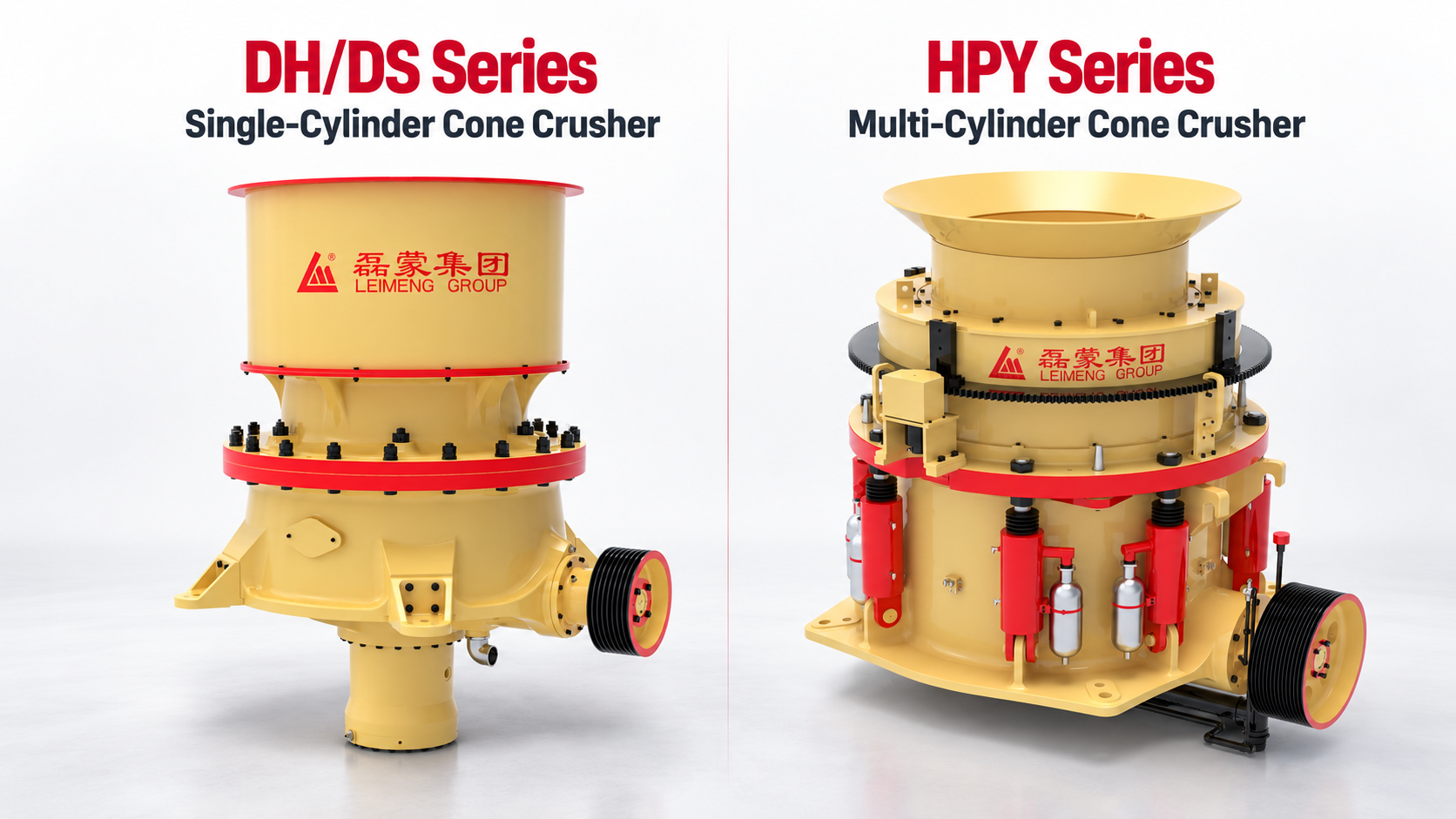
Single-Cylinder or Multi-Cylinder Cone Crusher: Which Fits Your Plant?
Choosing between a single-cylinder and a multi-cylinder cone crusher starts with the work the machine must do. What size material will it receive? Is it handling secondary or fine crushing? Which finished sizes must the plant produce, and in what proportions?
For Leimeng Group’s range, DH/DS single-cylinder hydraulic cone crushers cover secondary and fine crushing duties. HPY multi-cylinder hydraulic cone crushers cover secondary, fine and ultra-fine crushing, with the product range placing particular emphasis on fine and ultra-fine applications.
That overlap matters. Cylinder count alone cannot tell you which machine fits your plant. The useful comparison is between specific models, feed limits, discharge settings and the output required from the complete circuit.
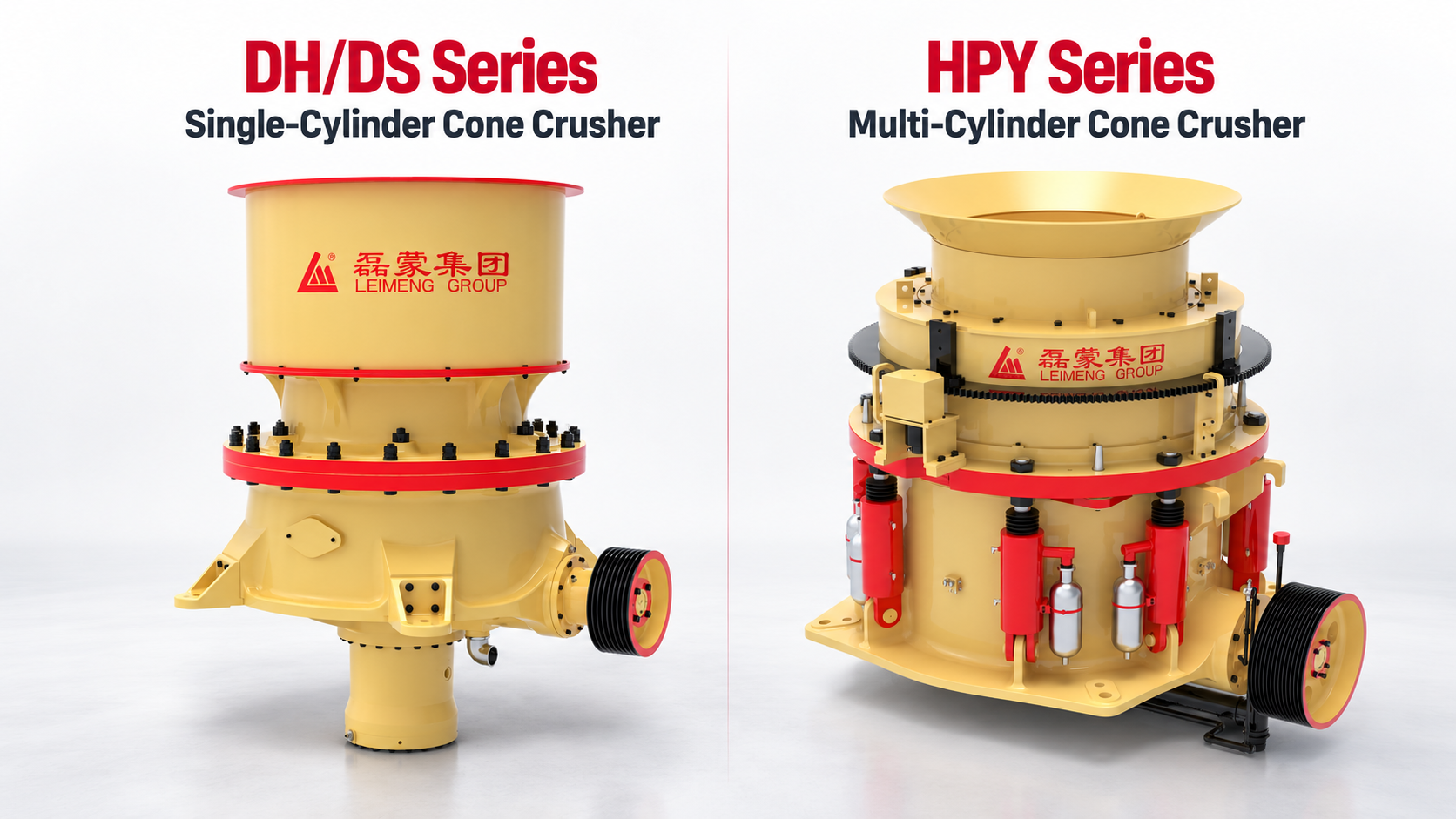
Leimeng DH/DS vs HPY: Features and Applications
Both product families provide hydraulic adjustment and clearing functions. Their published features offer a starting point for comparing operation and application.
| Item | DH/DS single-cylinder series | HPY multi-cylinder series |
| Published applications | Secondary and fine crushing of ores and rocks | Secondary, fine and ultra-fine crushing |
| Hydraulic functions | Overload protection and automatic cavity cleaning | Relief and locking cylinders, automatic locking and cavity cleaning |
| Adjustment and controls | Automatic discharge opening adjustment, working status display and fault alarms | Automatic discharge gap adjustment |
| Data to examine during selection | Differences between DH and DS models, feed limits and operating ranges | Capacity at the proposed discharge setting and suitability for the target product |
Features shown are summarized from the product brochures; confirm the full control configuration for the selected model.
To compare DH/DS and HPY for your plant, first check which models can accept the feed. Then compare capacity at the required discharge setting, expected product size distribution and operating cost. Both ranges include fine-crushing applications, so cylinder count alone should not eliminate an otherwise suitable model.
1. Start with the Raw Material
For granite, basalt and other hard rock applications, begin with the material’s strength, abrasiveness and feed size distribution. The rock name is useful, but it does not describe every condition the crusher will face.
Abrasive feed makes liner consumption an important part of the operating comparison. Variable feed sizes require attention to chamber selection. Wet material containing clay also raises questions about feeding, screening and material flow.
Before requesting a cone crusher proposal, collect:
- Rock type and any available material test results
- Maximum feed size and typical feed size distribution
- Moisture and clay conditions
- Required reduction and finished-product sizes
For an existing plant, use the material entering the cone crusher as the reference. The size of the original blasted rock does not describe the discharge arriving from the jaw crusher.
Changing from single-cylinder to multi-cylinder crushing does not solve unsuitable feed preparation by itself. If clay or wet fines are causing problems upstream, include those conditions in the process review.
2. Match the Model to the Crushing Stage
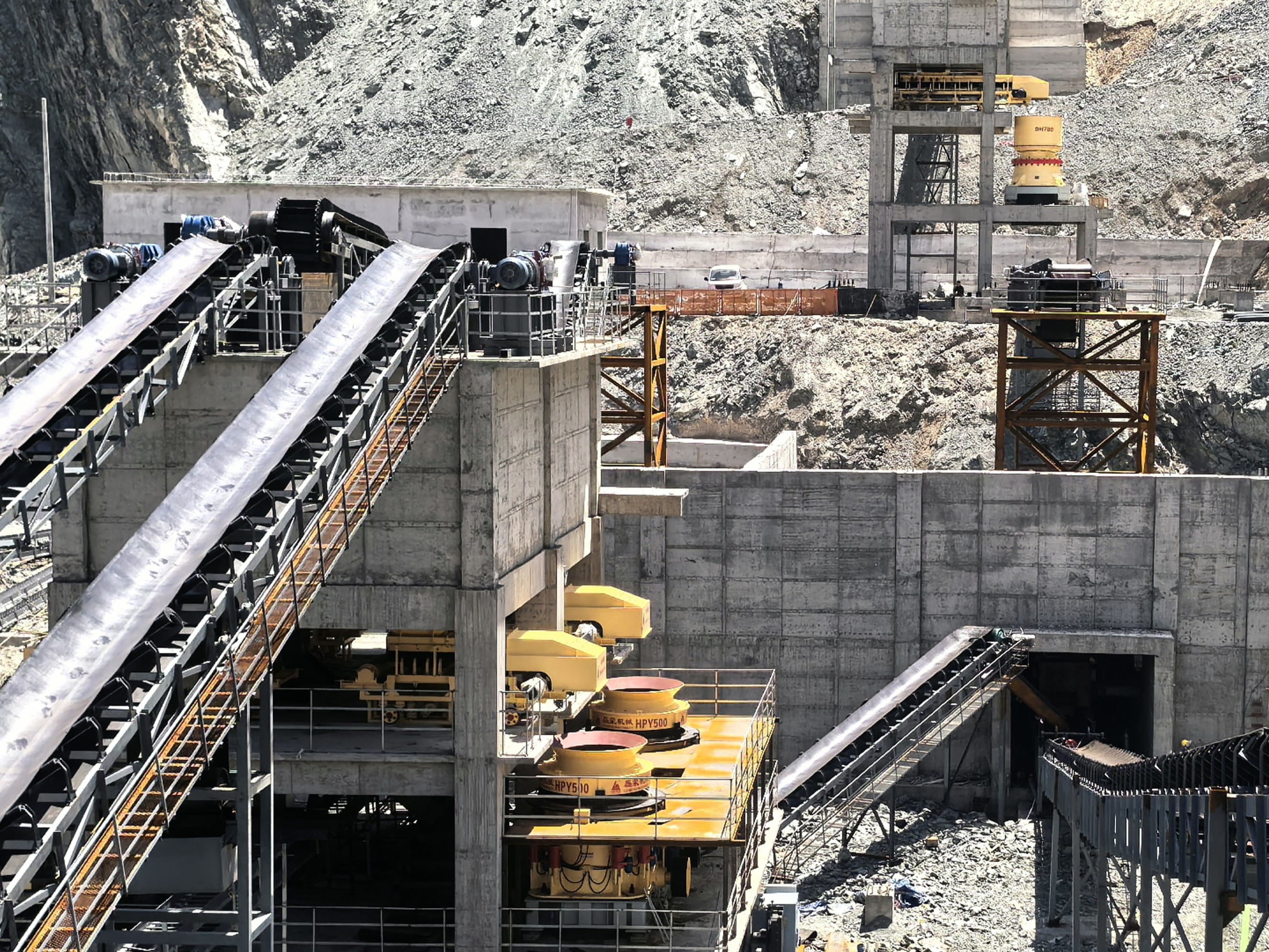
Secondary crushing: check the actual feed limit
A secondary cone crusher must accept the upstream discharge and prepare material for the next stage. Before comparing single-cylinder and multi-cylinder options, check the differences within each range. DH480 and DS480 are both single-cylinder models, but their maximum feed sizes differ substantially.
| Published specification | DH480 | DS480 |
| Maximum feeding size | 215 mm | 450 mm |
| Capacity range | 90–395 t/h | 195–601 t/h |
| Power | 220 kW | 250 kW |
Source: Leimeng Group DH/DS product brochure. These are published ranges, not results from a matched operating test.
The maximum feed size specified for DS480 is 450 mm, compared with 215 mm for DH480. This difference provides a useful first check when matching either model to the upstream crusher’s discharge.
For example, if the planned cone feed contains 300 mm lumps, it exceeds the DH480’s published 215 mm feed limit. The DS480 passes that initial maximum-size check, although chamber suitability, feed distribution and required capacity still need assessment.
This is a preliminary equipment check, not a complete plant recommendation.
Fine crushing: compare capacity at the intended setting
For fine crushing, the question becomes how much material the selected machine can process at the setting needed for the circuit.
HPY400 illustrates how the listed capacity varies with the discharge setting:
| Discharge setting (mm) | HPY400 capacity (t/h) |
| 13 | 185–230 |
| 19 | 255–320 |
| 25 | 295–370 |
| 38 | 360–490 |
| 51 | 465–630 |
Source: Leimeng Group HPY product brochure. Confirm the applicable material, chamber and operating conditions when sizing the machine.
The minimum discharge setting specified for HPY400 is 13 mm, at which the listed capacity is 185–230 t/h. At a 51 mm discharge setting, the listed capacity is 465–630 t/h. The maximum figure of 630 t/h therefore should not be used as the capacity at the minimum setting. These figures describe crusher throughput, not the output of a single finished-product size.
This distinction is essential when comparing quotations. A plant requiring fine crushing should evaluate the relevant operating point, rather than select a machine from the highest number in the capacity column. For a direct comparison with a DH model, request capacity data at the proposed discharge setting and under comparable feed conditions. The overall capacity ranges alone do not establish which machine will deliver more of the required product.
3. Work Backward from the Finished Product
Specify sizes and proportions
“Aggregate production” is not a complete product specification. A useful enquiry identifies the required fractions and the target output of each.
Consider two hypothetical granite projects with the same total finished-product target. One needs a larger share of 20–40 mm aggregate; the other needs more 5–10 mm and 10–20 mm material.
The second project asks more of the finer crushing stages. It may require a different chamber, additional crushing capacity or a different circuit arrangement. The same total tonnes per hour therefore does not establish the same equipment requirement.
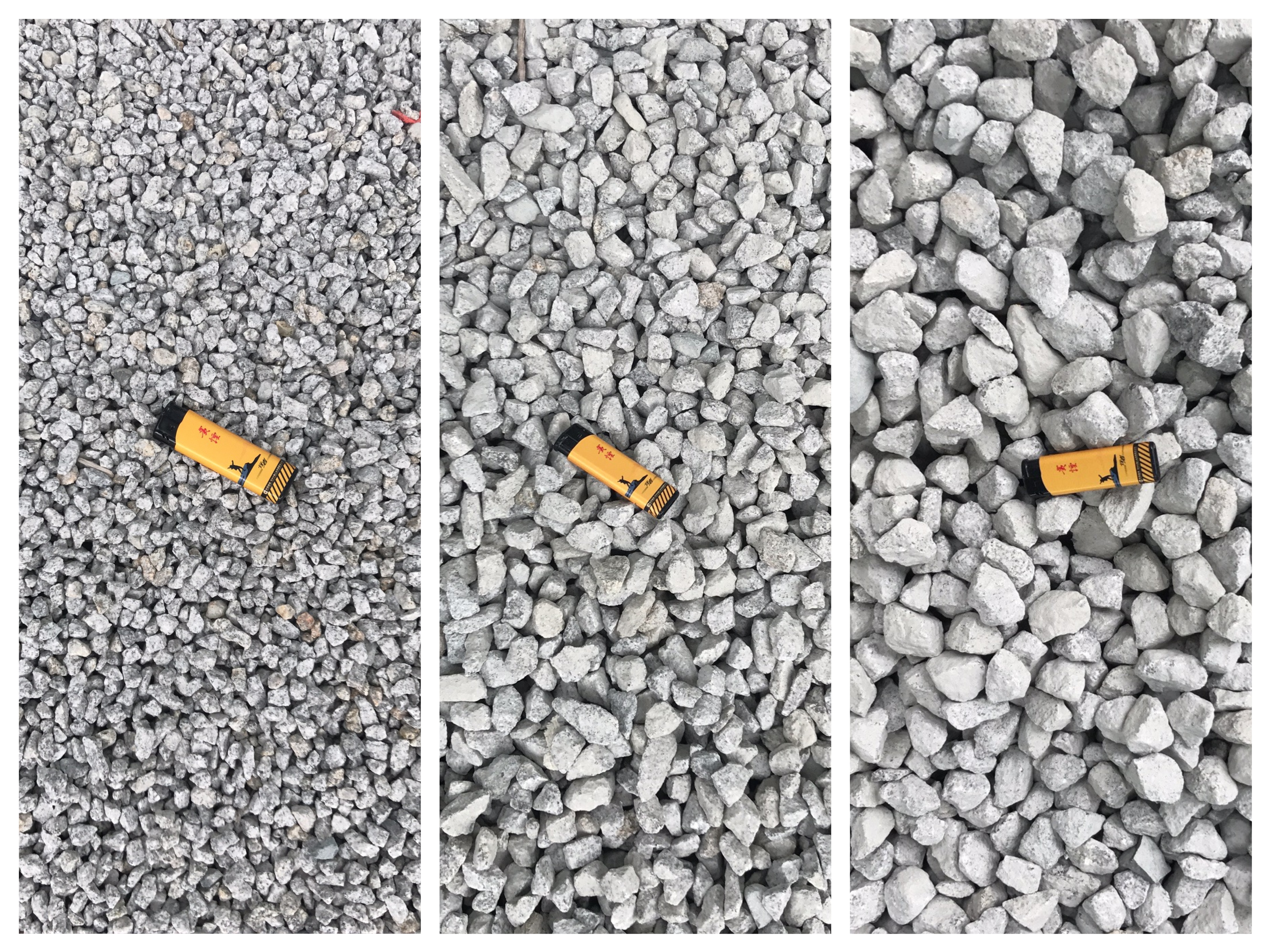
Separate discharge setting from finished-product size
A discharge setting describes an operating adjustment. It does not guarantee that every particle leaving the crusher falls below that dimension.
The crusher produces a size distribution. Screening separates the required fractions, and oversize can return for further crushing.
Accordingly, a published capacity figure should not be presented as the output of one saleable aggregate size. Ask for the expected product distribution and the circuit’s finished-product output.
Include particle shape and cleanliness
Where aggregate buyers specify particle shape, grading or cleanliness, include those requirements before choosing the crusher.
Feed distribution, chamber suitability, liner condition and screening all form part of that assessment. For manufactured sand, the proposal may also need shaping, classification, washing or fine sand recovery.
The selection target is the quantity of material meeting the client’s specification.
4. Compare the Complete Circuit and Operating Cost
A cone crusher in a closed circuit processes fresh feed together with returning oversize. Its internal throughput can therefore be higher than the plant’s finished-product output.
That difference affects crusher sizing, screen capacity and conveyor loading. Before selecting a larger machine, identify whether the restriction is in crushing, screening or material handling.
Use a consistent basis when comparing operating costs:
Operating cost per saleable tonne = operating expenditure during a defined period ÷ specification - compliant tonnes produced during that period.
Include electricity, liners, maintenance labour and consumables. Review spare parts availability and maintenance access alongside the calculation.
Installed motor power alone does not establish energy consumption per tonne. Likewise, the number of hydraulic cylinders does not establish liner life or maintenance cost.
FAQ
Can a single-cylinder cone crusher handle fine crushing?
Yes. Leimeng’s DH/DS product information includes fine crushing applications. Selection still depends on the specific model, chamber and feed conditions.
Can a catalogue establish which type costs less to operate?
A catalogue helps narrow the options, but a meaningful cost comparison also needs material data, expected liner consumption, actual power demand and maintenance requirements.
What information is needed for a replacement crusher?
Provide the existing model, feed and product data, layout, foundation information, available power and downstream equipment capacities. Include the problem the replacement must solve.
Discuss Your Application with Leimeng Group
Leimeng Group supplies DH/DS single-cylinder and HPY multi-cylinder hydraulic cone crushers, together with supporting crushing and screening equipment.
Send us your raw material, maximum cone feed size, required output in tonnes per hour for each product size, and project location. For an existing plant, include the equipment list and the main production problem.
These details allow our team to compare suitable models and configurations around the products your plant needs to deliver.