
Low Crushing Plant Output? Fix High Recirculating Load
Why Is Crushing Plant Output Low and Return Material High?
Stone keeps moving through the crushers and screens, but the finished stockpiles are growing slowly. At the same time, a steady stream of material returns for another crushing pass. Before increasing the feed rate, check how much of that returning material actually needs to be crushed again.
For a quarry operator, this means more than missed production targets. Repeated handling and unnecessary recrushing can consume energy and wear parts without producing more saleable aggregate.
Low crushing plant output can come from several sources: poor screening, unsuitable crusher settings, unstable feeding, changing material conditions or equipment that no longer matches the production requirement.
If it contains many particles that should have passed through the screen, investigate screening first. If it is mostly genuinely oversized stone, focus on the crushing stage.
Understand What the Return Material Is Telling You
In a closed-circuit crushing plant, oversized material returns from the screen for further crushing. This helps control final product size, so some return material is expected.
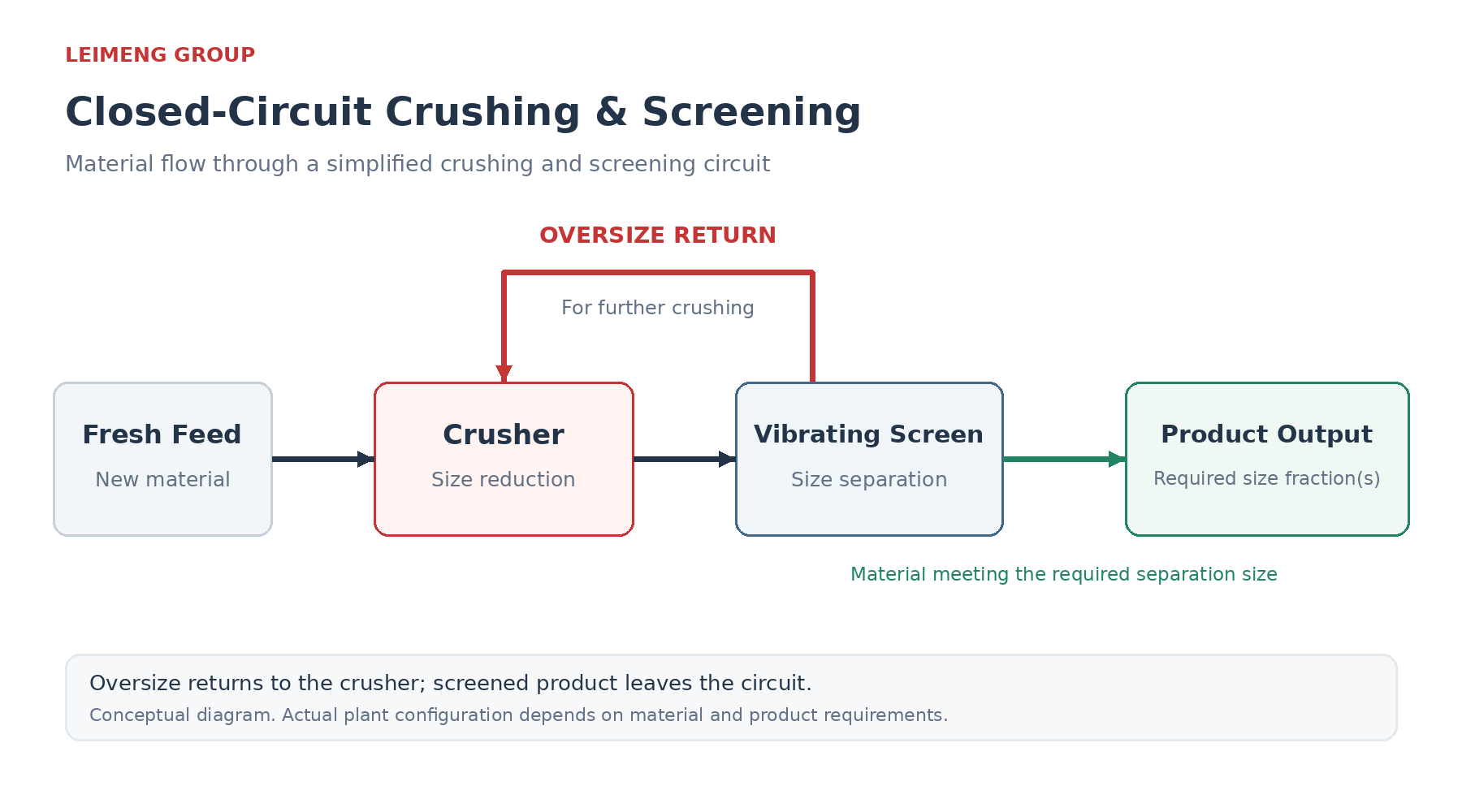
The problem is excessive circulation that occupies equipment capacity without increasing finished output. Poor separation can send undersize back to the crusher, while an unsuitable crushing duty can produce more oversize than the circuit can comfortably handle.
Consider a simple example:
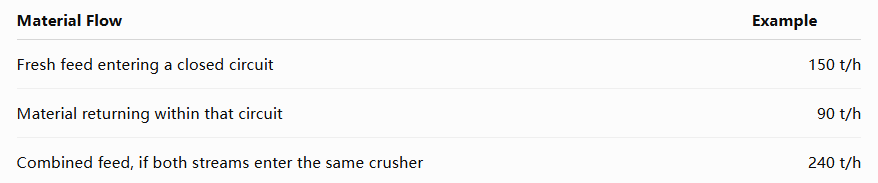
The crusher is handling 240 t/h, but this is not 240 t/h of new production. Part of that tonnage is material passing through again.
These figures illustrate material flow only. They are not a Leimeng project result or a recommended return-load target.
A Quick Guide to Low Output and Excessive Return Material
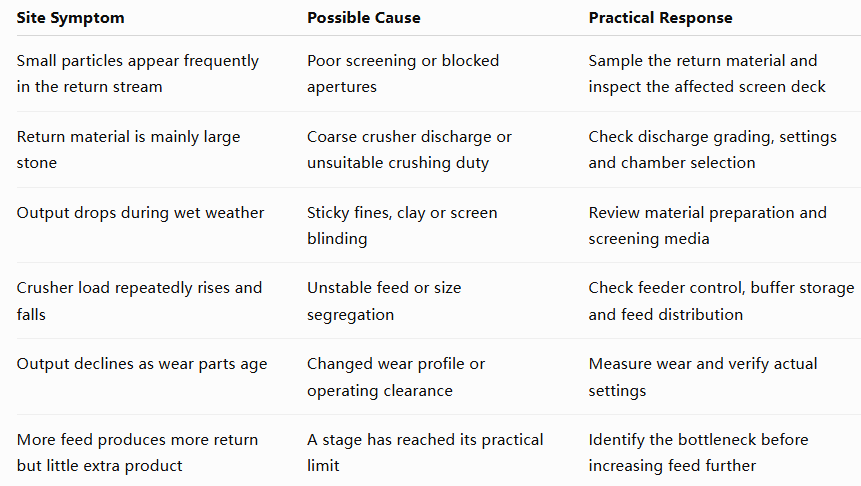
These symptoms help narrow the investigation; they do not confirm a fault on their own. Use approved sampling methods, and stop and isolate equipment before physical inspection or adjustment.
1. Improve Screening Before Sending More Stone Back
A vibrating screen can run continuously while separating material poorly.
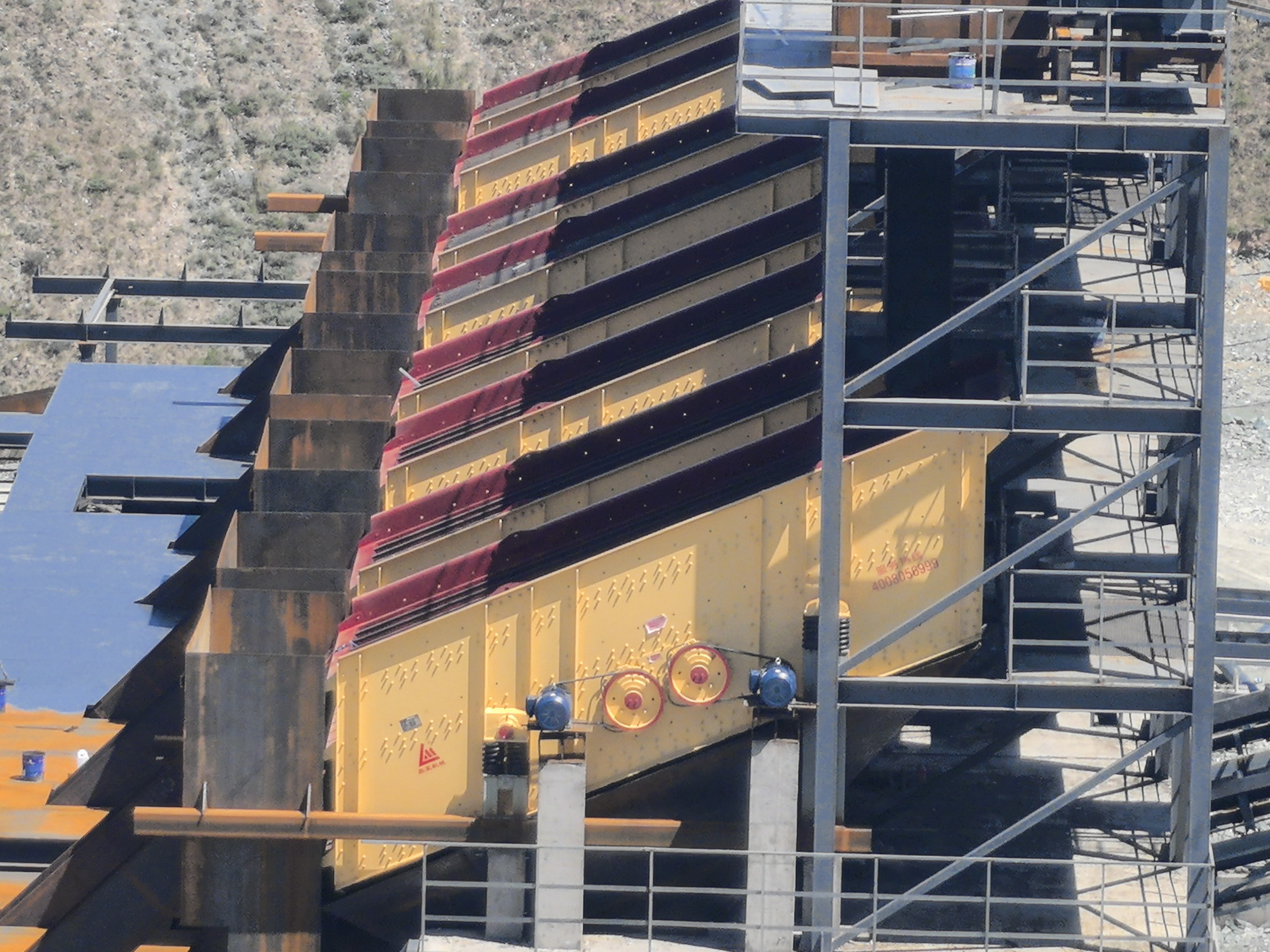
When the material bed becomes too deep, smaller particles have fewer opportunities to reach the screen surface. Uneven feeding can overload one part of the deck while leaving another part underused. Screen capacity also depends on the separation size and material conditions.
Start with three checks:
- Return material: Does sieve analysis show a substantial amount of material below the intended separation size?
- Screen surface: Are openings covered by sticky fines or blocked by lodged particles?
- Feed distribution: Is material spread across the usable deck width?
Correct uneven loading and address blocked or damaged screening media. If the problem continues at a stable feed rate, ask the supplier to review screen area, media selection and operating parameters.
Do not simply enlarge screen openings to reduce return material. That may increase apparent output while allowing unwanted oversized particles into the product.
Read the return-material sample alongside the flow measurements. A return stream made up mainly of oversized stone may be normal for the required product size. It deserves closer investigation when return tonnage increases while saleable output falls under comparable feed conditions. The aim is to remove unnecessary circulation while maintaining the required product grading.
2. Check Crusher Settings, Chamber and Wear
If screening is working properly but excessive oversize remains, examine the crusher discharge.
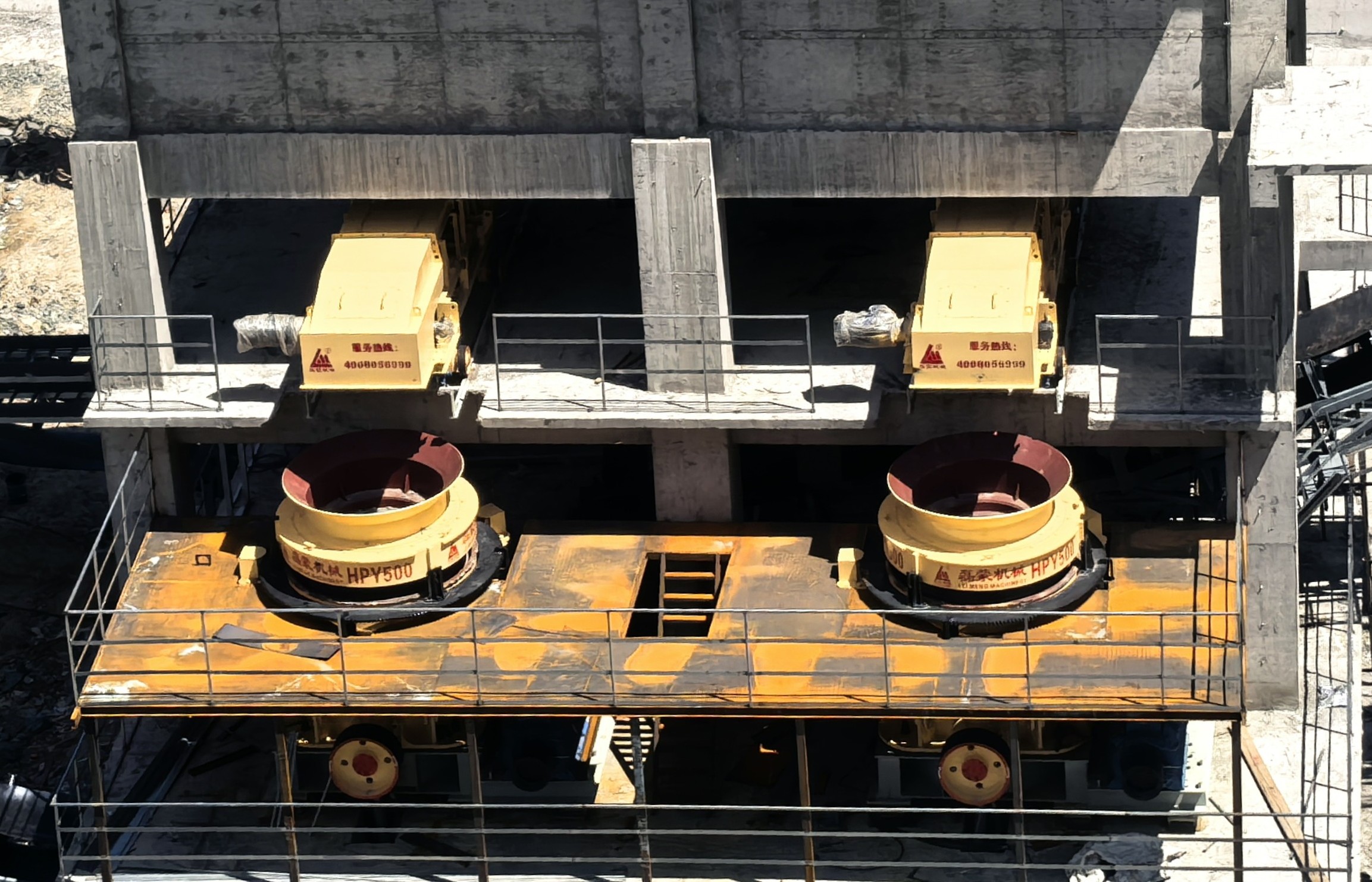
A smaller cone crusher closed side setting (CSS) generally produces a finer discharge, which may reduce the amount of oversize returning from the screen. However, it can also reduce throughput, increase operating load or produce more fines. Adjust within the manufacturer’s permitted range, then compare saleable tonnes per hour, product grading and crusher load. A lower return rate is useful only if the overall production result improves.
Check the actual setting against the equipment instructions and compare current discharge samples with earlier results.
Also check whether the installed chamber suits the current feed size and target product. A setting adjustment alone may not resolve a mismatch between the chamber and the crushing duty.
Also inspect the wear profile. A machine operating with worn or unevenly worn liners may behave differently from one with a suitable, correctly maintained chamber.
The practical sequence is:
- Confirm the current feed size distribution.
- Measure the actual setting using the approved procedure.
- Inspect wear parts against the manufacturer’s service criteria.
- Make an approved adjustment and test the result.
Judge the change by finished-product output and grading, as well as machine load.
3. Stabilize Feeding Across the Crushing Stages
A fluctuating feed supply makes it difficult to maintain consistent production.
For cone crushing, appropriate chamber loading and even feed distribution help establish stable operating conditions. Buffer storage and controlled feeding can reduce the effect of upstream fluctuations. The required feed level depends on the specific equipment and application.
Look for repeated patterns: a nearly empty chamber followed by a surge, coarse material collecting on one side, or a feeder that changes speed too abruptly.
Where needed, review:
- Feeder control and response.
- Usable storage between stages.
- Chute arrangement and material distribution.
- Changes in feed size during the shift.
Avoid increasing feeder speed solely because the finished stockpile looks small. First establish whether the next stage has capacity to accept more material.
4. Reassess the Material When Conditions Change
Has the quarry moved to a different rock layer? Has rain increased moisture? Is more clay entering with the feed?
These changes matter even when equipment settings remain unchanged. Feed grading, crushability, moisture and clay content can affect crusher performance.
Compare production under similar material and moisture conditions before concluding that equipment capacity is insufficient.
If clay and wet fines are contributing to poor screening, evaluate suitable preparation options, such as separating contaminated feed, pre-screening or a properly designed washing stage. The choice depends on the material, product requirements and available water treatment facilities.
For harder or less readily crushed feed, review the duty shared by the primary, secondary and tertiary stages. Asking one machine to perform too much size reduction may leave the downstream circuit struggling with oversize.
5. Match Equipment to the Product You Need to Sell
A plant originally configured for coarser aggregate may need a different equipment balance when buyers require more output in smaller size fractions.
Before changing equipment, define the required product sizes and tonnage for each fraction. Then assess the workload at every stage.
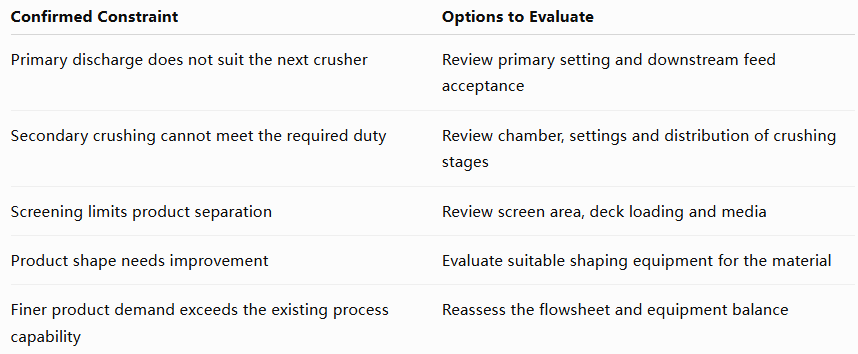
Example: A Change in Product Size Requirements
Suppose a quarry shifts its production target from a 0–40 mm product to a 0–20 mm product. If crusher discharge grading stays unchanged, a larger share of the material may need to return for further crushing.
Changing the screen openings alone does not add crushing capacity. Review the secondary crusher discharge, the available fine-crushing capacity and the load on the relevant screen deck together. Depending on the results, the solution may involve an approved setting change, a different chamber or a revised crushing-stage arrangement.
This is an illustrative operating scenario, not a Leimeng project case.
Crusher and screen capacity matching should use the flow each machine actually receives, including internal return material. Catalogue capacities alone do not establish finished-plant output.
A larger crusher may be appropriate when crushing is the confirmed restriction. If the screen is already limiting separation, its capacity must be reviewed at the same time.
Measure Saleable Output After Each Adjustment
The objective is to produce more material that meets the buyer’s specification.
For each controlled trial, record:
- Saleable output by product size, in t/h.
- Product sieve analysis.
- Fresh-feed and return-material flow.
- Energy used per tonne of saleable product.
- Unplanned stops and operating interruptions.
Compare similar rock and moisture conditions. Where practical, change one controllable factor at a time.
A lower return flow is useful only when product quality remains acceptable. Likewise, a higher crusher throughput has limited value if it creates more unwanted fines or off-specification aggregate.
FAQ
Why is crushing plant output low when every machine is running?
Operating machines can still be poorly matched. Check whether fresh material is becoming saleable product or repeatedly circulating through an overloaded stage.
Is high recirculating load always a problem?
No. Some products and flowsheets require substantial recirculation. Investigate when return flow rises unexpectedly, exceeds equipment capacity or accompanies falling saleable output.
How can I tell whether the crusher or screen is causing excessive return?
Sample the return stream. Significant undersize points toward a screening investigation; predominantly oversized stone calls for closer examination of crusher discharge and reduction duty.
Should I reduce the cone crusher CSS?
Only after checking feed, wear condition and the permitted setting range. Test any approved change against output, grading and machine load.
Can wider screen openings increase production?
They can change separation, but may also change the product specification. Confirm acceptable grading before adopting a different opening.
Why does output fall after rain?
Wet fines and clay can interfere with screening and material flow. Compare wet and dry feed conditions and inspect where buildup begins.
When is an additional crushing stage worth considering?
When a process review shows the required feed-to-product reduction cannot be handled effectively by the existing arrangement. Include screening, energy and wear costs in the assessment.
What should I send for a plant performance review?
Provide the material type, equipment list, process layout, current and target output, feed and product sizes, operating settings and recent sample results.
Leimeng Crushing and Screening Support
For an existing plant with low output or excessive return material, our team can review the client’s requirements and discuss suitable equipment and process configurations.
Send us your raw material, required capacity, maximum feed size, final product sizes and project location. For an operating line, include the current equipment layout, screen openings, crusher settings and available production records.