
1200 t/h Granite Crushing Line in Southeast Asia | Leimeng
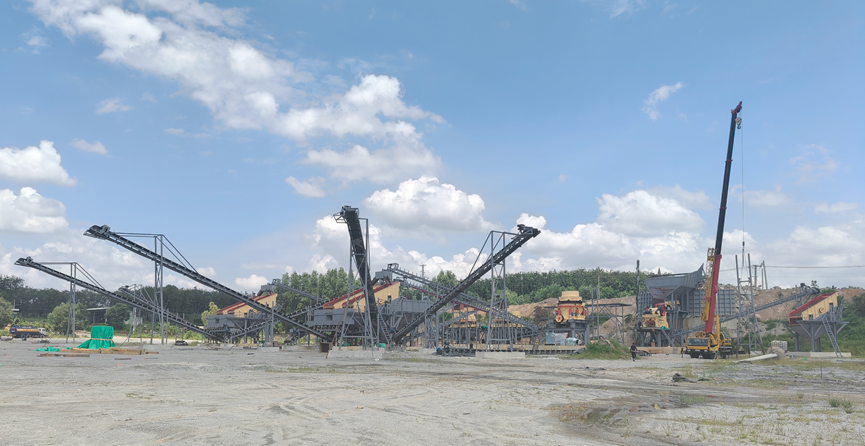
1200 t/h Granite Crushing and Screening Line Nears Production in Southeast Asia
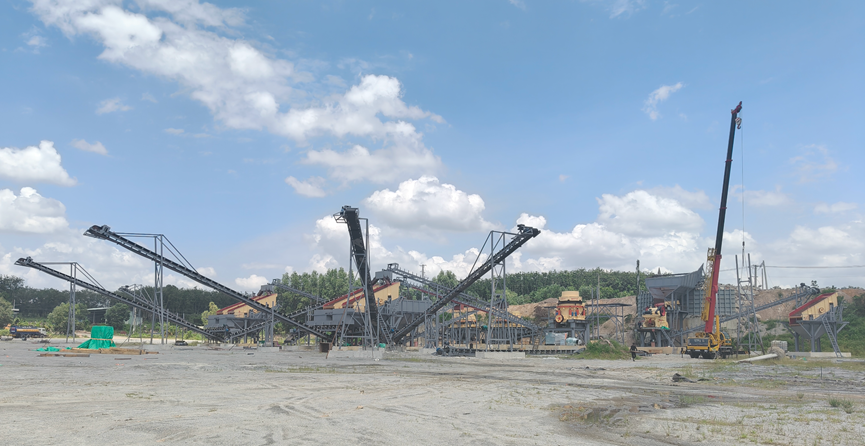
A new granite crushing and screening project supplied by Leimeng Group has entered the final installation stage in Southeast Asia. The line is designed for a capacity of 1200 t/h and will produce four sizes of high-quality aggregates for roads, bridges, infrastructure and building projects.
This project also shows how a complete hard rock aggregate production system can support infrastructure demand in Southeast Asia. For aggregate producers, the key question is not only whether a crusher can handle hard rock. The real challenge is whether the whole crushing and screening line can keep stable output, control wear, produce consistent aggregate sizes and support long-term operation. This is exactly where Leimeng’s complete line solution creates value.
Why Granite Crushing Needs a System Solution
Granite is widely used in aggregate production because of its hardness, strength and durability. However, these same properties also make granite more difficult to process than softer materials such as limestone.
In a granite crushing line, equipment selection should start with the material, not the machine. Feed size, rock hardness, abrasiveness, required capacity, final product size and screen classification all affect the final plant performance.
A poorly matched system may lead to high circulating load, unstable discharge size, fast wear part consumption and lower screening efficiency. For this reason, Leimeng configured the project as a complete crushing and screening line instead of a single-machine supply.
Project Overview: 1200 t/h Granite Crushing Line
This Southeast Asia project is designed to process raw granite into four finished aggregate sizes. The aggregates will be used in local infrastructure construction, including road base materials, concrete aggregate, bridge construction and building projects.
Project highlights:
- Raw material: granite
- Designed capacity: 1200 t/h
- Finished products: four aggregate sizes
- Application: roads, bridges, infrastructure and construction
- Project stage: final installation, preparing for commissioning
- Solution type: complete crushing and screening line
For concrete and construction aggregate applications, product grading matters. International aggregate standards place strong emphasis on grading and quality because aggregate size distribution can directly affect concrete performance, workability and final strength.
Equipment Configuration for Hard Rock Processing
To handle the high hardness and abrasiveness of granite, Leimeng configured a multi-stage crushing and screening system. The main equipment includes:
- GC Series high-performance jaw crusher
- H Series multi-cylinder hydraulic cone crusher
- LMC Series cone crusher
- YKJ Series vibrating screen
- Vibrating feeders and conveyor systems in different specifications
This configuration follows a clear process logic: primary crushing, medium-fine crushing, screening and product classification.
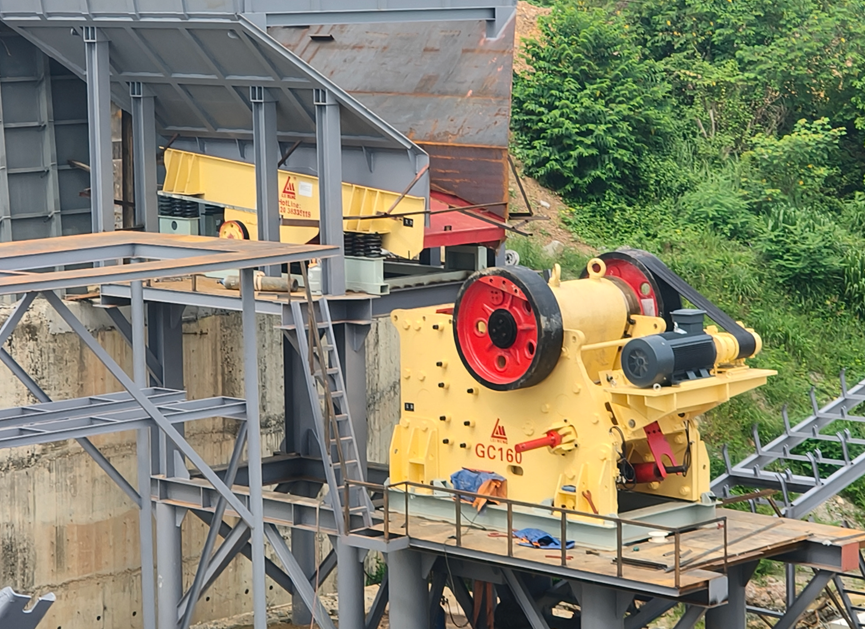
Primary Crushing: GC Series Jaw Crusher
In a granite aggregate production line, the primary crusher must accept large feed material and reduce it into a size suitable for the next crushing stage. For hard rock applications, a jaw crusher is often selected because it uses compression crushing and is suitable for high-strength, abrasive stone.
The GC Series jaw crusher in this project works as the first-stage crushing unit. Its role is to provide stable feed size for the cone crushing stage and reduce pressure on downstream equipment.
For granite projects, stable primary crushing is important because oversized or uneven feed can affect the whole production line. A well-matched jaw crusher helps improve the continuity of feeding, reduce sudden load changes and support higher plant stability.
Medium and Fine Crushing: Cone Crushers for Granite
After primary crushing, granite usually requires cone crushing for further size reduction. Compared with impact crushers, cone crushers are more suitable for hard and abrasive materials such as granite, basalt and river stone.
In this project, Leimeng uses both H Series multi-cylinder hydraulic cone crushers and LMC Series cone crushers. This combination helps balance crushing efficiency, product size control and production stability.
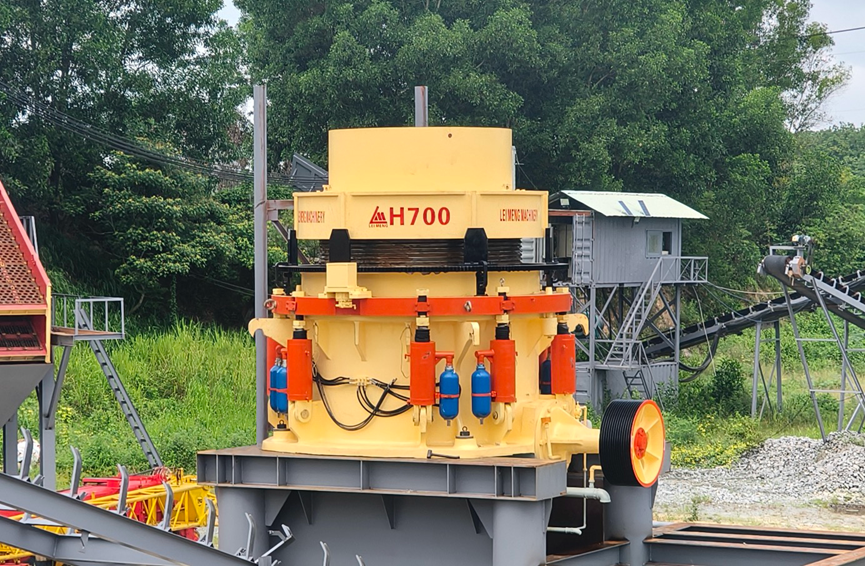
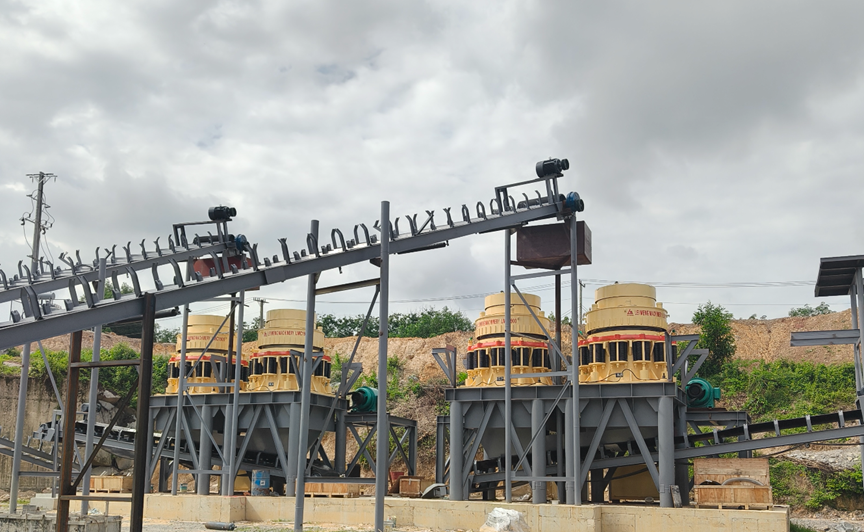
The cone crushing stage directly affects the final aggregate shape, circulating load and screen efficiency. If the crusher discharge size and screen cut size are not matched, the plant may face excessive recirculation and reduced real output.
That is why Leimeng treats crushing and screening as one complete system, not as separate machines.
Screening and Classification: YKJ Series Vibrating Screen
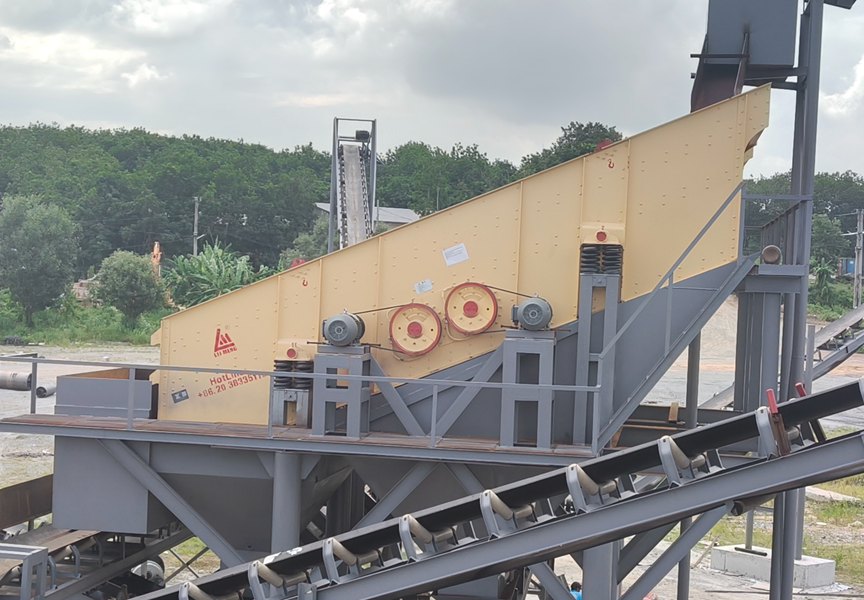
A vibrating screen does more than separate stone sizes. In a granite crushing line, it controls final aggregate specifications, reduces unqualified material and determines how much material returns to the crushing circuit.
The YKJ Series vibrating screen in this project is used to classify crushed granite into four finished aggregate sizes. Good screening performance helps keep product quality stable and supports the continuous operation of the crushing circuit.
For aggregate producers, screen efficiency is closely connected with profit. If screening capacity is too low, the cone crusher may receive unnecessary recirculating material. If screen media is not suitable, product grading may become unstable.
Why This Line Can Support Four Finished Aggregate Sizes
Producing four aggregate sizes from granite requires more than high crushing capacity. It requires balanced equipment matching, reliable screening and well-designed material flow.
In this line, each stage has a clear function:
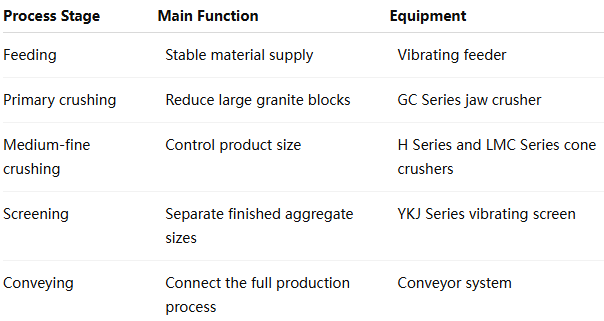
This process helps the client obtain stable output while producing aggregate sizes required for different construction uses.
Full-Process Service for Faster Project Delivery
For overseas mining and aggregate projects, equipment quality is only one part of success. Project execution, technical communication, installation support and training are just as important.
From the beginning of this Southeast Asia project, Leimeng formed a professional project team to support the client through the full process, including:
- Process design
- Plant layout optimization
- Equipment manufacturing and quality control
- International logistics coordination
- On-site installation guidance
- Commissioning support and operator training
- Follow-up technical service
This full-process service helps reduce communication costs, shorten project delivery time and support the line as it moves toward production.
Serving Southeast Asia’s Growing Aggregate Demand
Southeast Asia continues to invest in roads, bridges, industrial parks, housing and public infrastructure. These projects require stable supplies of crushed stone and high-quality aggregates.
For local aggregate producers, a high-capacity granite crushing line can help improve market supply, support project schedules and reduce dependence on unstable external aggregate sources.
With mature crushing and screening equipment, overseas project experience and a full service system, Leimeng Group continues to support aggregate, mining and infrastructure projects across Southeast Asia.
How to Choose Equipment for a Granite Crushing Line
When planning a granite crushing line, clients should not choose equipment only by model name. The following factors should be checked first:
1. Raw material hardness and abrasiveness
Granite is a hard and abrasive material, so jaw crushers and cone crushers are usually more suitable than impact crushers for the main crushing stages.
2. Required capacity
A 1200 t/h line requires strong equipment matching. The primary crusher, cone crushers, screens and conveyors must be designed as one system.
3. Final aggregate sizes
The number of final products affects screen deck configuration, screen opening sizes and the design of the recirculating circuit.
4. Site layout
Plant layout affects feeding, conveying distance, maintenance access and installation efficiency. A well-designed layout helps reduce unnecessary transfer points and improves operation.
5. Long-term maintenance
Wear parts, screen media, lubrication, inspection access and operator training all affect the long-term cost per ton.
Leimeng’s Value: More Than Equipment Supply
A crushing line is not a one-time purchase. It is a long-term production system. For the client, the real value comes from stable operation, lower downtime, easier maintenance and consistent aggregate quality.
Leimeng Group provides jaw crushers, cone crushers, impact crushers, vibrating screens, sand-making equipment, mobile crushing plants and complete aggregate production lines. Based on the client’s raw material, capacity, feed size, final product requirements and site conditions, Leimeng can help configure a practical crushing and screening solution.
For this Southeast Asia granite project, the 1200 t/h line is not only another equipment delivery. It is a complete project practice that reflects Leimeng’s manufacturing capability, process design experience and overseas service strength.
FAQ
Q1: What equipment is usually used for granite crushing?
Granite crushing usually uses a jaw crusher for primary crushing and cone crushers for medium and fine crushing. Vibrating screens are used to classify the final aggregate sizes.
Q2: Why are cone crushers suitable for granite?
Cone crushers use compression crushing and are suitable for hard, abrasive materials. They help control discharge size and support stable operation in hard rock aggregate plants.
Q3: How many aggregate sizes can a crushing line produce?
It depends on the screen configuration and process design. This Southeast Asia granite line is designed to produce four finished aggregate sizes.
Q4: What information is needed to design a granite crushing line?
The main information includes raw material type, feed size, required capacity, final product sizes, site layout, moisture content and maintenance requirements.
Q5: Can Leimeng support overseas installation and commissioning?
Yes. Leimeng provides process design, layout optimization, equipment manufacturing, logistics coordination, installation guidance, commissioning support, training and follow-up technical service for overseas projects.
Conclusion
The Southeast Asia 1200 t/h granite crushing line shows how a complete crushing and screening solution can support high-capacity aggregate production. By combining GC Series jaw crusher, H Series multi-cylinder hydraulic cone crusher, LMC Series cone crusher, YKJ Series vibrating screen and full-process service, Leimeng Group helps the client move from project construction to stable production more efficiently.
For quarry, mining and infrastructure projects, Leimeng will continue to provide practical, reliable and service-supported crushing and screening solutions for clients worldwide.