
A lead-zinc mining project in Kazakhstan has recently entered production with crushing and screening equipment supplied by Leimeng Group. In this project, a Leimeng PE Series PEX300×1300 jaw crusher and YKJ Series vibrating screens are used in the main crushing and screening process, helping the site handle lead-zinc ore more steadily at the front-end processing stage.
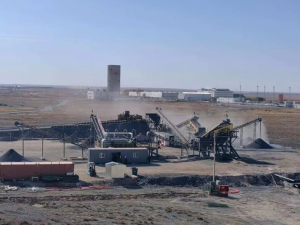
Leimeng crushing and screening equipment operating at a lead-zinc mining project in Kazakhstan.
For mining operations, the first crushing and screening stage is more than a simple size-reduction step. It affects downstream processing, equipment load, screening efficiency and long-term plant stability. This is especially important for lead-zinc ore projects, where reliable material preparation can help support the next stage of mineral processing.
The Kazakhstan project uses lead-zinc ore as the main raw material. A Leimeng PE Series PEX300×1300 jaw crusher is used in the front-end crushing section, while YKJ Series vibrating screens classify the crushed material before it moves to the next stage. The screen setup is matched with the crusher output to help maintain stable material flow and reduce unnecessary recirculation.
This configuration follows a practical mining principle: start with the ore, then match the equipment. Ore hardness, feed size, moisture, abrasiveness and final size requirements all affect how a crushing and screening system should be designed. For a lead-zinc mining project, the goal is not only to crush rock, but also to keep the process stable enough for continuous site operation.
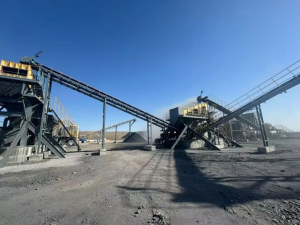
The conveyor system connects the crushing and screening equipment at the Kazakhstan lead-zinc ore project.
Lead and zinc remain important industrial metals. According to the U.S. Geological Survey, sphalerite, or zinc sulfide, is the principal ore mineral for zinc, and zinc ranks fourth among metals in world production, after iron, aluminum and copper. About three-fourths of zinc use is in metallic form, mainly for galvanizing steel and other alloy applications.
Lead also has long-standing industrial value. USGS notes that lead has been used for at least 5,000 years, and modern lead demand is strongly connected with lead-acid storage batteries, including applications in vehicles, industrial equipment, backup power and mining equipment.
Because lead-zinc ore is usually processed through multiple stages, the crushing section must prepare material in a consistent way. If the primary crusher output is unstable, the screen load may fluctuate. If screening is not efficient, oversized material can return to the crusher and increase circulating load. Over time, this may lead to higher wear, more downtime and less predictable production.
In a lead-zinc ore crushing plant, a jaw crusher is commonly used in the front-end crushing stage to reduce large ore pieces into a size suitable for screening and further processing.
The Leimeng PE Series PEX300×1300 jaw crusher offers a processing capacity of approximately 32–144 t/h, depending on material hardness, feed size, discharge setting and site operation. In this Kazakhstan project, it supports the front-end crushing section where stable throughput is required.
The PE Series jaw crusher works through compression. The moving jaw pushes the ore against the fixed jaw, and the material is gradually reduced as it moves downward through the crushing chamber. For mining applications, a stable jaw crusher helps control the feed condition for the next stage and reduces sudden overload in the system.
For overseas mining projects, primary crushers need to meet three practical requirements. A jaw crusher that is difficult to inspect or maintain can create unnecessary downtime, especially in remote mining areas where service resources and spare parts planning are important.
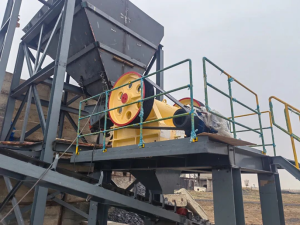
Leimeng PE Series PEX300×1300 jaw crusher used in the front-end crushing section of the Kazakhstan lead-zinc project.
Crushing and screening should be viewed as one system. The crusher reduces the ore size, while the screen controls which material moves forward and which material needs further processing. If the screen is undersized or not matched with crusher output, the whole plant may become unbalanced.
The YKJ Series vibrating screen used in this project helps classify crushed lead-zinc ore and supports a more controlled material flow. In mining operations, this matters because screening efficiency affects crusher load, circulating material, downstream processing and final production stability.
A well-matched screen can help reduce unnecessary recirculation. It can also improve the consistency of material entering the next processing stage. This is one reason vibrating screens should not be treated as secondary accessories. In a mining crushing plant, the screen is part of the production control system.
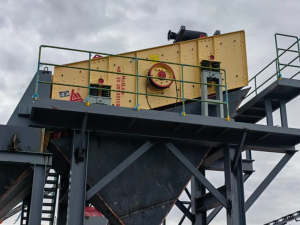
Leimeng YKJ Series vibrating screen classifying crushed lead-zinc ore in a mining crushing plant.
One useful lesson from mining equipment selection is to avoid looking at each machine separately. A jaw crusher, vibrating screen, conveyor and downstream process must work together. The real performance of a lead-zinc ore crushing plant depends on how these machines match each other under real site conditions.
For this reason, Leimeng Group focuses on several factors before recommending a crushing and screening configuration:
| Design Parameter | Why It Matters for Lead-Zinc Ore |
|---|---|
| Ore Hardness | Affects jaw crusher settings, wear-part service life and long-term operating stability. |
| Feed Size (mm) | Determines the required PE Jaw Crusher inlet dimensions and optimal crushing cavity profile. |
| Moisture Content (%) | High moisture may reduce screening efficiency and increase the risk of material sticking or plugging. |
| Required Output Size | Determines screen opening selection and supports more consistent downstream processing. |
| Site Layout & Logistics | Influences conveyor incline angles and heavy component accessibility in remote regions like Kazakhstan. |
| Capacity Requirement | Helps match crusher size, screen area and conveyor layout. |
This system-based thinking is especially important in Kazakhstan and other overseas mining markets, where equipment reliability, spare parts planning and after-sales follow-up can directly affect daily operation.
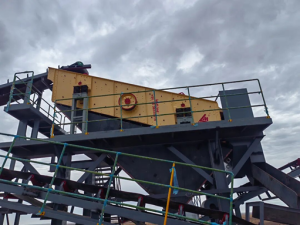
A balanced crushing and screening setup helps improve material flow and plant stability in mining operations.
This Kazakhstan lead-zinc project shows how Leimeng Group supports overseas mining clients with practical crushing and screening equipment, project follow-up and operation-focused service. For mining sites, reliable equipment is only one part of the project; stable operation also depends on inspection, adjustment, spare parts planning and timely support.
Leimeng will continue to follow up after commissioning, helping the site review operation conditions, spare parts needs and practical service support as production continues.
Leimeng Group provides jaw crushers, cone crushers, impact crushers, vibrating screens, sand-making equipment, mobile crushing plants and complete aggregate and mining crushing lines. For each project, the equipment configuration should be based on the client’s raw material, capacity requirement, feed size, final product size and site conditions.
For lead-zinc ore projects, a practical crushing and screening setup can help improve material preparation, reduce unstable feeding, support downstream processing and improve long-term plant reliability.
Q1: What equipment is used in the Kazakhstan lead-zinc project?
The project uses a Leimeng PE Series PEX300×1300 jaw crusher and YKJ Series vibrating screens for the main crushing and screening process.
Q2: Why is a jaw crusher used for lead-zinc ore crushing?
A jaw crusher is commonly used in front-end ore crushing because it can reduce large pieces of lead-zinc ore into a size that is easier to screen and process in the next stage.
Q3: Why is vibrating screening important in mining plants?
Vibrating screening helps separate crushed ore by size, reduce unnecessary recirculation and keep the material flow more stable for downstream processing.
Q4: How should a lead-zinc ore crushing plant be designed?
A lead-zinc ore crushing plant should be designed around ore hardness, feed size, moisture content, required capacity, final output size and site layout. The crusher, screen and conveyor system should be matched to keep material flow stable.
Q5: Can Leimeng provide complete mining crushing solutions?
Yes. Leimeng Group provides jaw crushers, cone crushers, impact crushers, vibrating screens, mobile crushing plants and complete production line solutions for mining and aggregate projects.
The Kazakhstan lead-zinc project shows how a Leimeng PE Series PEX300×1300 jaw crusher and YKJ vibrating screens can support practical mining operations overseas. For lead-zinc ore processing, stable front-end crushing and efficient screening are key to smoother downstream production and long-term plant reliability.
Leimeng Group will continue supporting mining clients with equipment, project follow-up and practical crushing and screening solutions built around real site conditions.
Email format error
Email cannot be empty
Email already exists
6-20 characters(letters plus numbers only)
The password is inconsistent
Email format error
Email cannot be empty
Email does not exist
6-20 characters(letters plus numbers only)
The password is inconsistent