
In a granite aggregate project in Guinea, the client was facing a common problem in older quarry plants: the primary crushing section relied on several small jaw crushers working at the same time. The setup could run, but it was not efficient enough for long-term aggregate production.
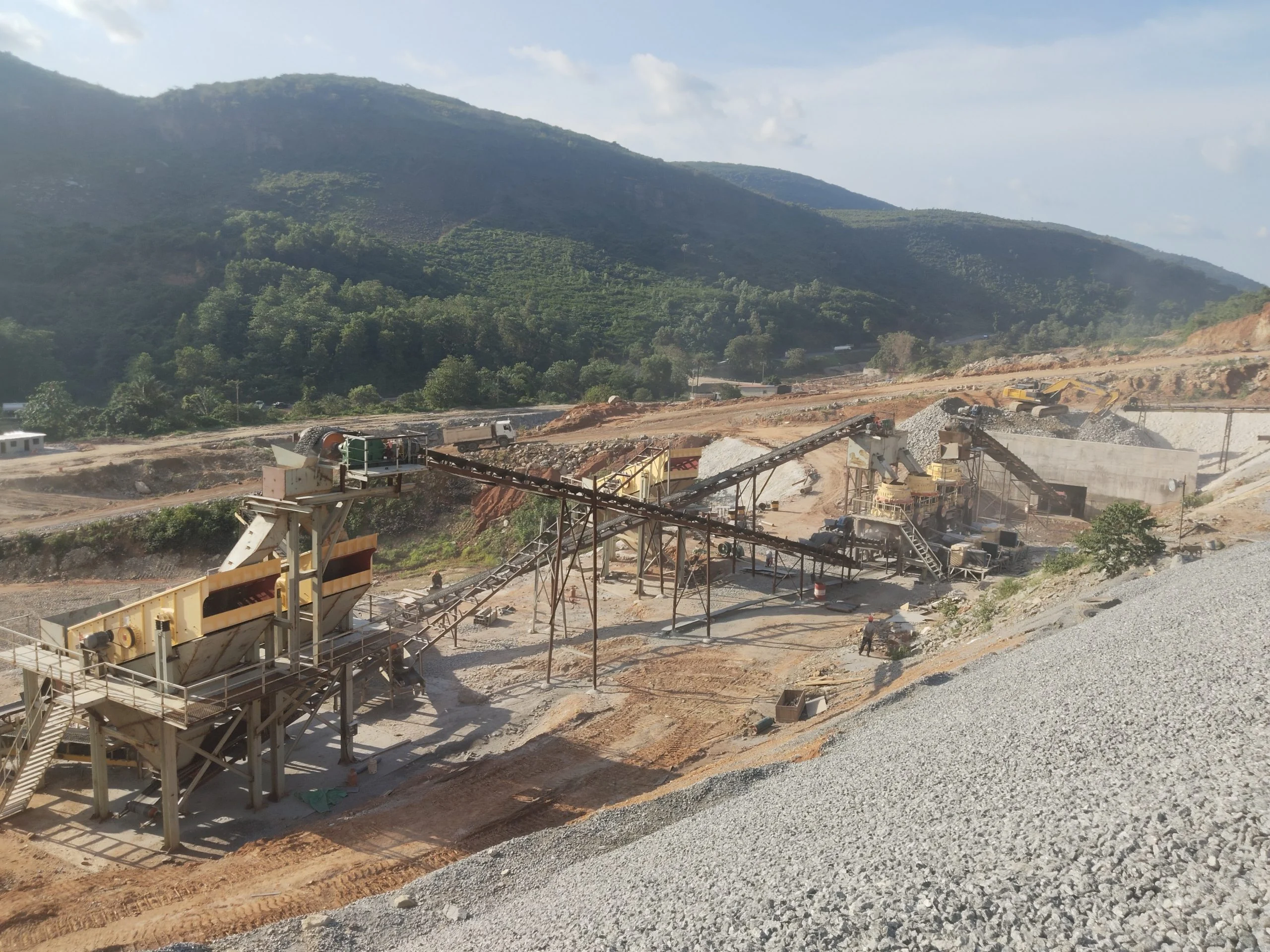
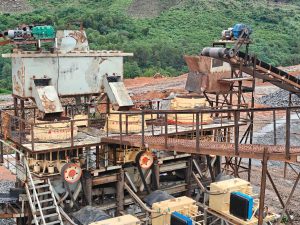
Full site view of the Guinea granite aggregate production line upgraded with Leimeng crushing and screening equipment.
The main issues were limited capacity, frequent equipment failures, higher energy use per ton and unstable production. To improve the plant’s overall performance, Leimeng provided an upgraded crushing and screening configuration covering primary crushing, secondary crushing and final screening.
The final solution was straightforward: replace the complicated multi-machine primary crushing setup with one PE900×1200 jaw crusher, use one LMC1650 and two LMC1400 compound cone crushers for hard rock secondary crushing, and install three 2YKJ2570 double-deck vibrating screens for final aggregate classification.
In many older aggregate plants, adding more small machines may look like a simple way to increase output. However, when several small jaw crushers work in parallel, the system often becomes harder to control. Feeding may not be even, maintenance points increase, and one machine failure can quickly affect the whole production rhythm.
For a hard rock material like granite, this problem becomes more obvious. Granite is generally regarded as a hard and abrasive rock in aggregate production, and it is often associated with a Mohs hardness range of around 6–7 depending on its mineral composition. In practice, this means the crushing system should not be selected by capacity alone. Feed size, crushing force, liner wear, CSS control, screening capacity and long working hours all need to be considered together.
That means the primary and secondary crushing equipment must be selected not only for capacity, but also for crushing force, wear resistance, feeding stability and long operating hours.
The original granite crushing line in Guinea used older equipment and required a system upgrade for steadier production.
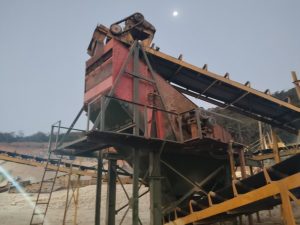
The previous screening and conveying section showed the need for a more balanced crushing and screening configuration.
| Item | Configuration |
|---|---|
| Project location | Guinea |
| Material | Granite |
| Project type | Existing aggregate line upgrade |
| Previous primary crushing setup | Multiple small jaw crushers running in parallel |
| New primary crusher | PE900×1200 jaw crusher |
| Secondary crushing | 1 × LMC1650 compound cone crusher + 2 × LMC1400 compound cone crushers |
| Screening system | 3 × 2YKJ2570 double-deck vibrating screens |
| Main upgrade target | Improve capacity, reduce failures, lower energy use per ton and stabilize product quality |
The upgrade focused on several measurable engineering factors rather than simply adding more machines. The old primary crushing section used multiple small jaw crushers, which increased the number of maintenance points and made stable feeding more difficult. By replacing this setup with one PE900×1200 jaw crusher, the primary crushing stage became simpler and easier to control.
For the secondary stage, the combination of one LMC1650 and two LMC1400 cone crushers was selected for hard rock reduction. In granite aggregate production, cone crushers are commonly used because they can provide stable compression crushing and better wear control than impact crushers in highly abrasive applications.
The screening section was also part of the system upgrade. Three 2YKJ2570 double-deck vibrating screens were configured to classify the crushed granite into required aggregate sizes and help control the circulating load. In a crushing plant, screen capacity directly affects crusher load, product grading and overall production stability.
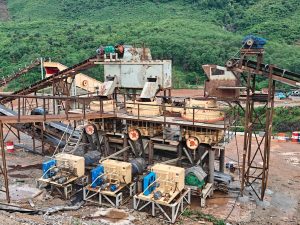
Overview of the upgraded granite aggregate production line in Guinea with Leimeng crushing and screening equipment.
For a granite crushing plant, the first question should not be “Which crusher is the biggest?” A better question is: “What kind of material is being processed, and what does the final aggregate need to look like?”
Granite usually requires a stable primary crusher and a reliable secondary crushing stage. If the first-stage crusher cannot handle large feed material smoothly, the downstream cone crushers and screens will also be affected. If the secondary crushing stage is not balanced with screening capacity, the plant may face high circulating load, unstable output and faster wear.
That is why Leimeng designed this upgrade as a complete crushing and screening system, instead of replacing one machine only.
The original line used several small jaw crushers in the primary crushing stage. This increased the number of equipment points, made maintenance more complicated and limited the stability of the feeding process.
Leimeng replaced this setup with one PE900×1200 jaw crusher. In a hard rock aggregate plant, this kind of simplification can bring several practical benefits:
A jaw crusher is usually a practical choice for hard rock primary crushing because it uses compression force to reduce large stones before secondary crushing.
After primary crushing, granite still needs further reduction before final screening. For this stage, Leimeng configured one LMC1650 compound cone crusher and two LMC1400 compound cone crushers.
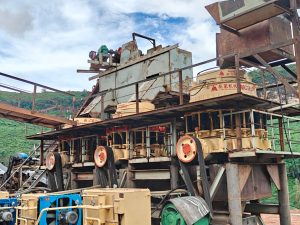
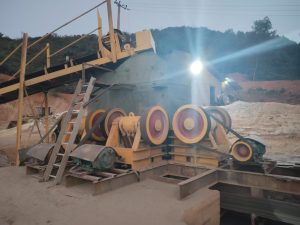
Leimeng LMC compound cone crusher working in the secondary crushing stage of the Guinea granite aggregate line.
Cone crushers are commonly used in hard rock aggregate plants because they are suitable for materials such as granite, basalt and river stone. Compared with impact crushing in highly abrasive rock, cone crushing is often a more stable option for long-term operation and wear cost control.
In this project, the LMC cone crusher configuration helps the plant improve:
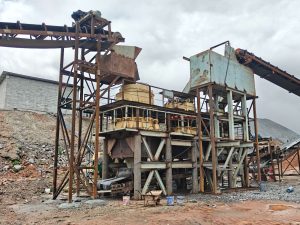
The LMC cone crusher section supports hard rock reduction after primary crushing.
This is also where the system-level design matters. The cone crushers must match the output of the PE900×1200 jaw crusher and the capacity of the YKJ vibrating screens. If one part is oversized or undersized, the whole plant can lose balance.
Screening is not just the final step after crushing. In a granite aggregate production line, vibrating screens directly affect final product size, product consistency and recirculating load.
For this Guinea project, Leimeng configured three 2YKJ2570 double-deck vibrating screens. The purpose is to classify crushed granite into required aggregate sizes and keep the final product grading more stable.
A properly matched screening system can help:
This is one of the most important lessons in aggregate plant upgrading: crushers and screens should be designed as one circuit, not as separate machines.
The upgraded line connects cone crushing and vibrating screening to improve aggregate size control.
Because the project is still focused on practical plant operation, the improvement should be understood through the system changes rather than unsupported percentage claims. The upgrade mainly improved the line in five areas:
1. Simpler Primary Crushing Structure
Replacing several small jaw crushers with one PE900×1200 jaw crusher reduced the number of primary crushing machines in operation. This makes feeding, inspection and maintenance easier to manage.
2. More Stable Feed to the Secondary Stage
A simplified primary crushing section helps provide a more consistent feed flow to the LMC cone crushers. Stable feeding is important for cone crusher performance, liner wear control and product size consistency.
3. Better Match for Hard Granite Crushing
Granite is a hard and abrasive material. The PE jaw crusher and LMC cone crushers were selected to handle hard rock reduction through compression crushing, which is more suitable for this type of material than relying on impact crushing in high-wear conditions.
4. Improved Aggregate Classification
The three 2YKJ2570 double-deck vibrating screens help separate crushed granite into required aggregate sizes. A properly matched screening system can reduce oversized material, control recirculating load and support more consistent final product grading.
5. Better Long-Term Cost Control
For a hard rock aggregate plant, operating cost is affected by more than electricity use. Wear parts, downtime, maintenance access, recirculating load and product consistency all influence the final cost per ton. This upgrade was designed to improve those factors through a more balanced crushing and screening layout.
This Guinea granite plant upgrade shows that a modern aggregate line should not be designed by simply adding more machines. A better approach is to review the material, feed size, production target, wear conditions and screening requirements together.
For quarry owners and aggregate producers, these questions are worth asking before upgrading an old plant:
If the answer to several of these questions is “yes,” the problem may not be one machine. It may be the whole crushing and screening circuit.
Leimeng provides crushing, screening and complete aggregate production line solutions for quarry, mining and construction aggregate projects. For hard rock applications such as granite and basalt, Leimeng can help clients configure suitable equipment according to material hardness, feed size, required capacity and final aggregate specifications.
In this Guinea project, the upgrade was not only about replacing old machines. It was about building a more balanced crushing and screening system with fewer bottlenecks, more stable operation and better long-term performance.
Q1: What is the best crusher for granite primary crushing?
A jaw crusher is commonly used for granite primary crushing because it can handle large feed sizes and hard rock materials through compression crushing.
Q2: Is cone crusher suitable for granite aggregate production?
Yes. Cone crushers are widely used for hard rock secondary crushing, especially for granite, basalt and river stone aggregate production.
Q3: Why should crushers and screens be matched together?
Because crusher output directly affects screen load, while screening capacity affects recirculating load and crusher stability. If the two are not balanced, the plant may suffer from unstable production, excessive wear and lower efficiency.
Q4: When should an old aggregate line be upgraded?
An upgrade should be considered when the plant has limited capacity, frequent downtime, high wear cost, unstable product size or equipment that no longer matches current production requirements.
Q5: Can Leimeng provide a complete crushing and screening solution?
Yes. Leimeng provides jaw crushers, cone crushers, impact crushers, vibrating screens, mobile crushing plants, sand-making equipment and complete aggregate production line solutions.
Actual plant performance may vary depending on raw material hardness, feed size, moisture content, abrasiveness, crusher CSS setting, screen opening size, feeding stability and daily operation conditions. Before confirming a crushing plant upgrade plan, Leimeng’s engineering team usually reviews the client’s material data, current equipment layout, target capacity and final aggregate specifications.
This Guinea granite aggregate line upgrade demonstrates that improving plant performance requires more than replacing individual machines—it requires a coordinated crushing and screening system designed around material characteristics and production targets.
For procurement managers and plant operators evaluating similar upgrades, the next step is to translate these insights into a practical plan. This typically includes reviewing current plant bottlenecks, confirming feed size and capacity requirements, and assessing whether existing crushers and screens are properly matched.
Leimeng supports this process with structured technical consultation. By sharing your material data, current equipment layout and production goals, you can receive a tailored configuration proposal, equipment selection guidance and estimated performance improvements.
If you are planning to upgrade an existing granite crushing plant or design a new aggregate production line, Contact us Today. Share your raw material data and layout constraints to receive a customized configuration proposal aligned with your specific operational and cost targets.
Email format error
Email cannot be empty
Email already exists
6-20 characters(letters plus numbers only)
The password is inconsistent
Email format error
Email cannot be empty
Email does not exist
6-20 characters(letters plus numbers only)
The password is inconsistent