
A 1000 TPH aggregate line has to do more than crush rock. It needs stable feeding, efficient size reduction, accurate screening, good particle shape, clean finished products and controlled fine sand recovery.
In Gansu, China, Leimeng supplied a customized tuff aggregate production line for a client with a high-capacity production target. The project is designed around tuff processing and combines primary crushing, cone crushing, VSI shaping, multi-stage screening, sand washing and fine sand recovery into one complete process.
The result is a practical crushing and screening solution built for stable output, better aggregate shape and multiple finished product sizes for road construction, municipal engineering and concrete production.
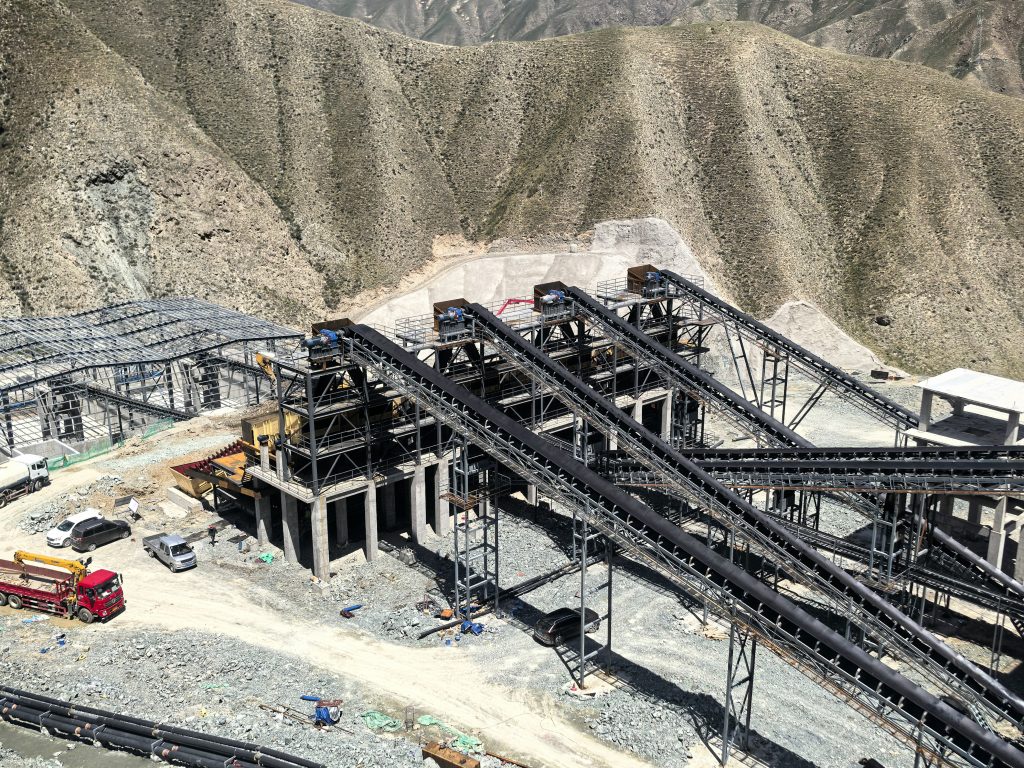
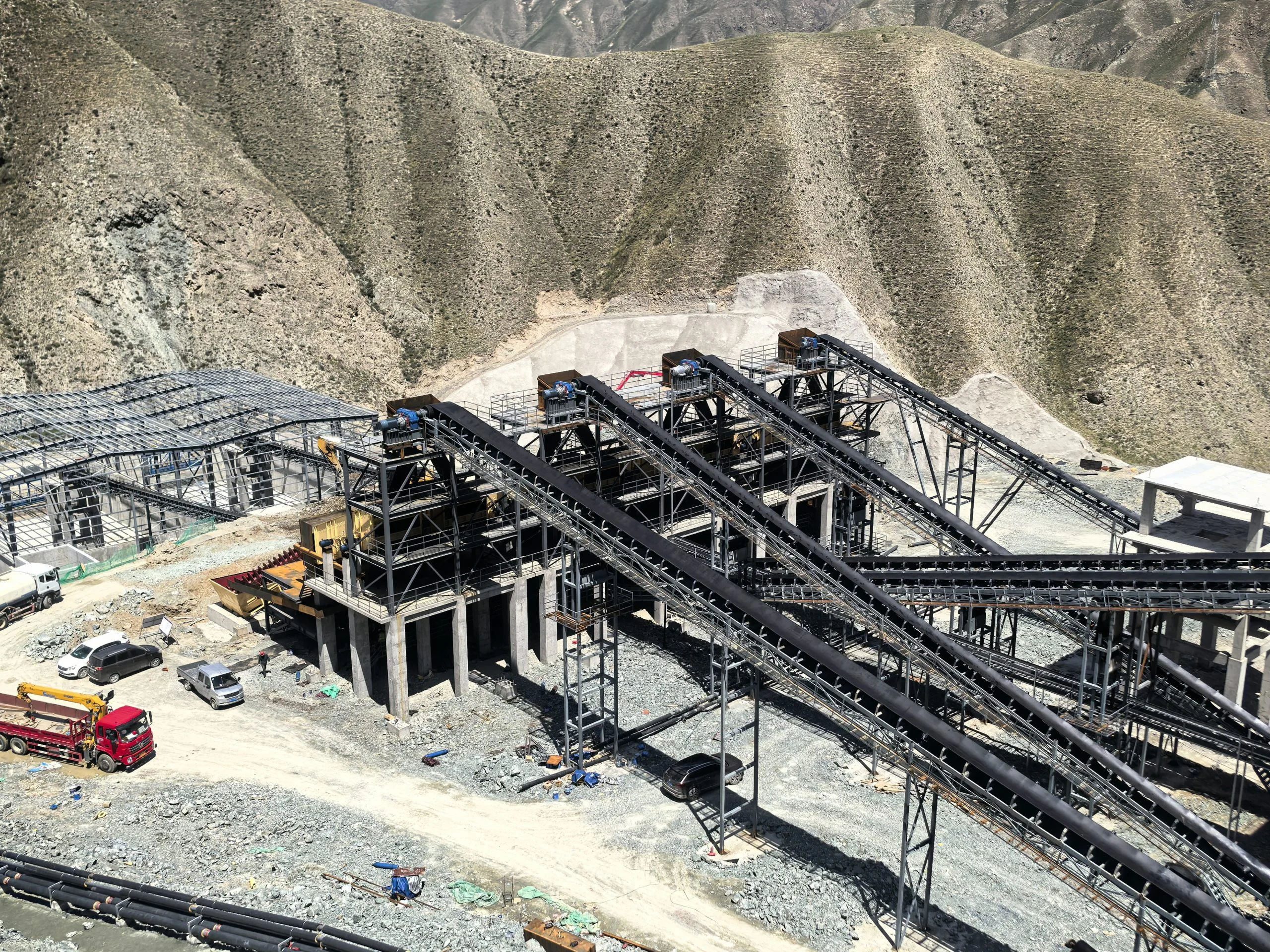
Overall view of the Leimeng 1000 TPH tuff aggregate production line project site in Gansu.
Tuff can be a good raw material for aggregate production, but it still needs the right crushing process. Its hardness, moisture content, porosity and weathering condition may vary from site to site. Because of this, the same equipment layout may not perform equally well in every quarry.
If the crushing and screening system is not properly matched, the plant may face unstable output, excessive fines, high circulating load, poor particle shape or unnecessary wear. For a high-capacity plant, these problems can quickly affect production cost per ton.
That is why Leimeng designed the Gansu project as a complete process instead of a simple equipment combination. From primary jaw crushing to cone crushing, VSI shaping, screening, washing and fine sand recovery, each stage was selected to match the material characteristics and the client’s 1000 TPH capacity requirement.
The Gansu project is built for tuff aggregate processing. Based on the client’s production target, raw material and site conditions, Leimeng Group configured a complete crushing, screening and washing line.
| Project Item | Details |
|---|---|
| Raw material | Tuff |
| Project location | Gansu, China |
| Required capacity |
1000 tons per hour |
| Main process | Feeding, primary crushing, cone crushing, VSI shaping, screening, washing, fine sand recovery |
| Final products | Multiple sizes of aggregates and manufactured sand |
| Applications | Road construction, municipal works, concrete batching and infrastructure projects |
For this tuff aggregate production line, Leimeng configured a full set of crushing, screening and washing equipment. The equipment combination is designed to support stable production, controlled product size and cleaner final aggregates.
| Process Stage | Equipment | Model |
|---|---|---|
| Feeding | Linear feeder | ZSW2060B |
| Primary crushing | Jaw crusher | GC160 |
| Medium crushing | Single-cylinder hydraulic cone crusher | DH780 |
| Fine crushing | Multi-cylinder hydraulic cone crusher | HPY500B |
| Shaping and sand making | Vertical shaft impact crusher | LM10000 |
| Screening | Three-deck double-shaft vibrating screen | 3YKJ3075A |
| Sand washing | Double spiral sand washer | 2LSX1580 |
| Fine sand recycling | Fine sand recycling machine | ZKX3053-D2C |
| Auxiliary feeding | Feeder | ZW1620 |
| Auxiliary feeding | Feeder | ZW1420 |
This configuration reflects a system-level design. The jaw crusher handles large feed material, the cone crushers control medium and fine crushing, the VSI crusher improves particle shape, and the vibrating screen separates different aggregate sizes. After that, the washing and fine sand recovery system helps improve cleanliness and reduce material loss.
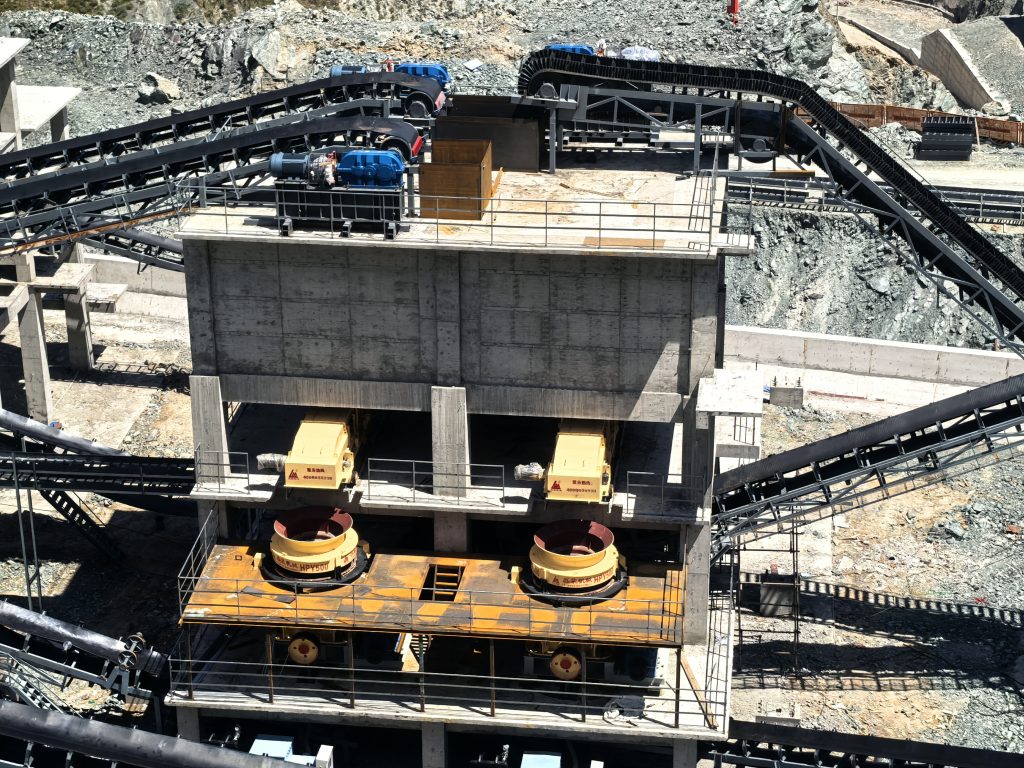
Cone crushing section used for secondary and tertiary crushing in the Gansu tuff aggregate plant.
The GC160 jaw crusher is used as the primary crusher. Its job is to reduce large tuff blocks into a size that can be handled smoothly by the downstream cone crushers.
A stable primary crushing stage is important for the whole plant. If the discharge from the jaw crusher is too uneven, the cone crushers may face unstable load, higher wear and reduced production efficiency. In this project, the jaw crusher provides a steady foundation for the following crushing stages.
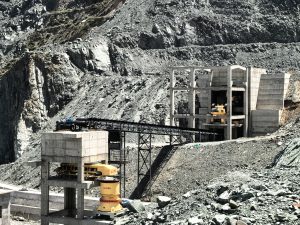
Primary crushing station handling raw tuff material at the Gansu aggregate production site.
The DH780 single-cylinder hydraulic cone crusher and HPY500B multi-cylinder hydraulic cone crusher are used for medium and fine crushing. This two-stage cone crushing arrangement helps control particle size before the material enters shaping and screening.
Cone crushing is suitable for aggregate plants that need stable discharge, controlled reduction and continuous operation. By matching the two cone crushers with the upstream jaw crusher and downstream screen, the Gansu line can reduce unnecessary recirculating load and improve overall process stability.
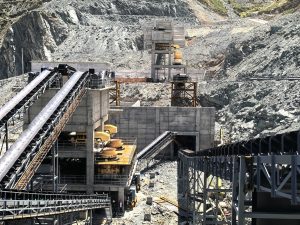
DH780 and HPY500B cone crushers used for medium and fine crushing stages in the Gansu tuff aggregate plant.
After cone crushing, part of the material still needs better particle shape or further fine crushing. The LM10000 vertical shaft impact crusher is used for shaping and sand making.
For road construction and concrete applications, aggregate shape matters. Better-shaped particles can improve packing performance and make the final product more suitable for commercial aggregate use. In this production line, the VSI crusher helps improve the value of finished aggregates and manufactured sand.
Screening is not just a support process. In a high-capacity aggregate plant, the vibrating screen directly affects product grading, circulating load and crusher performance.
The 3YKJ3075A three-deck double-shaft vibrating screen separates crushed material into different product sizes. This allows the plant to produce multiple aggregate specifications from the same raw material.
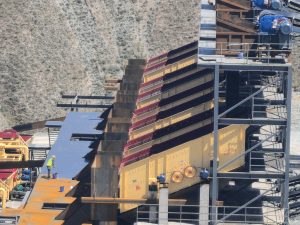
Vibrating screen separating aggregates into different sizes for further processing.
The 2LSX1580 double spiral sand washer removes impurities from sand and aggregate, while the ZKX3053-D2C fine sand recycling machine helps recover useful fine particles during washing. This is important for manufactured sand production, because fine sand loss can reduce yield and affect final product grading. A well-matched fine sand recycling system also supports better material recovery and more efficient sand washing operation.
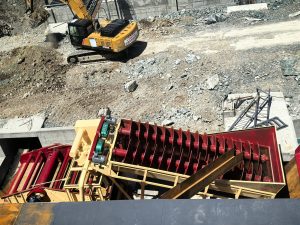
Spiral sand washer combined with fine sand recycling machine for efficient sand cleaning and fine material recovery.
Beyond equipment selection, stable aggregate quality also depends on how the entire plant is controlled and arranged on site. In the Gansu project, Leimeng focused on process coordination, automation and layout efficiency to support continuous high-capacity production.
The production line is designed with centralized control, allowing operators to monitor key parameters such as feed rate, crusher load, screen efficiency and sand washing performance in real time. This helps reduce manual intervention and improves overall operational stability.
In addition, the plant layout is optimized to shorten material transfer distances and reduce unnecessary conveying loops. A more compact and logical layout not only improves efficiency, but also helps lower energy consumption and maintenance workload.
By combining equipment performance with process control and layout planning, the production line can maintain stable output, consistent product quality and smoother day-to-day operation.
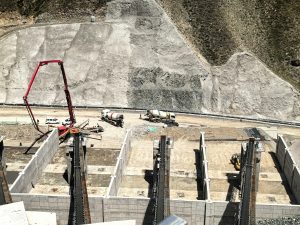
Overall plant layout showing conveyor arrangement and equipment distribution in the aggregate line.
For modern aggregate producers, sustainability is closely connected with operating cost. A plant that reduces unnecessary recirculating load, avoids over-crushing and recovers more useful fine material can support both environmental goals and better production economy.
In this project, washing and fine sand recovery are important parts of the process. They help improve product cleanliness, reduce material waste and support more responsible aggregate production. For the client, this means the plant is designed not only for capacity, but also for long-term operating stability.
After commissioning, the Gansu tuff aggregate production line can produce multiple sizes of aggregates and manufactured sand. The finished products can be used in:
For local infrastructure development, a stable aggregate supply is important. A well-designed production line can help reduce dependence on outside aggregate sources and improve material consistency.
Leimeng provided more than equipment for this project. Before finalizing the process, the technical team reviewed the raw material, site conditions and the client’s 1000 TPH production target.
The complete solution reflects Leimeng Group’s experience in quarry, mining and aggregate production projects. From process design to equipment matching, the goal is to help the client build a stable, efficient and cleaner production line that can support long-term operation.
Q1: What is a tuff aggregate production line?
A tuff aggregate production line is a crushing, screening and washing system used to process tuff rock into different sizes of aggregates and manufactured sand.
Q2: What equipment is used in a 1000 TPH aggregate plant?
A 1000 TPH aggregate plant usually needs feeders, jaw crusher, cone crushers, VSI crusher, vibrating screens, sand washer, fine sand recovery equipment and conveyors. The final configuration depends on the raw material, capacity, site layout and product requirements.
Q3: Why use jaw crusher and cone crusher together?
The jaw crusher handles large feed material in the primary stage, while cone crushers reduce the material further in the medium and fine crushing stages. This combination helps improve crushing stability and product size control.
Q4: Why is VSI shaping important?
VSI shaping helps improve aggregate particle shape and supports manufactured sand production. Better-shaped aggregate is more suitable for concrete, asphalt and road construction applications.
Q5: Why is fine sand recycling needed after washing?
Fine sand recycling helps reduce the loss of useful fine particles during washing. It can improve sand yield, reduce waste and support more efficient manufactured sand production.
The Gansu 1000 TPH tuff aggregate production line shows how a high-capacity crushing project should be planned. It is not a simple combination of machines, but a complete production system built around raw material, capacity, product size, particle shape and washing requirements.
With ZSW2060B feeding, GC160 jaw crushing, DH780 and HPY500B cone crushing, LM10000 VSI shaping, 3YKJ3075A screening, 2LSX1580 washing and ZKX3053-D2C fine sand recycling machine, Leimeng provides a complete solution for stable and efficient tuff aggregate production.
For quarry and aggregate producers, the right production line should match the actual working conditions. Leimeng helps clients design crushing and screening systems that support stable output, better aggregate quality and long-term operation.
Email format error
Email cannot be empty
Email already exists
6-20 characters(letters plus numbers only)
The password is inconsistent
Email format error
Email cannot be empty
Email does not exist
6-20 characters(letters plus numbers only)
The password is inconsistent