
Home›News›How Does a 3-Unit Tracked Mobile Crushing and Screening Plant Work?

How Does a 3-Unit Tracked Mobile Crushing and Screening Plant Work?
🕒 2026-11-11
How Does a 3-Unit Tracked Mobile Crushing and Screening Plant Work?

A Real 3-Unit Tracked Mobile Crushing and Screening System

A tracked mobile crushing plant is designed for projects where the crushing and screening equipment needs to operate directly at the quarry or mining site.

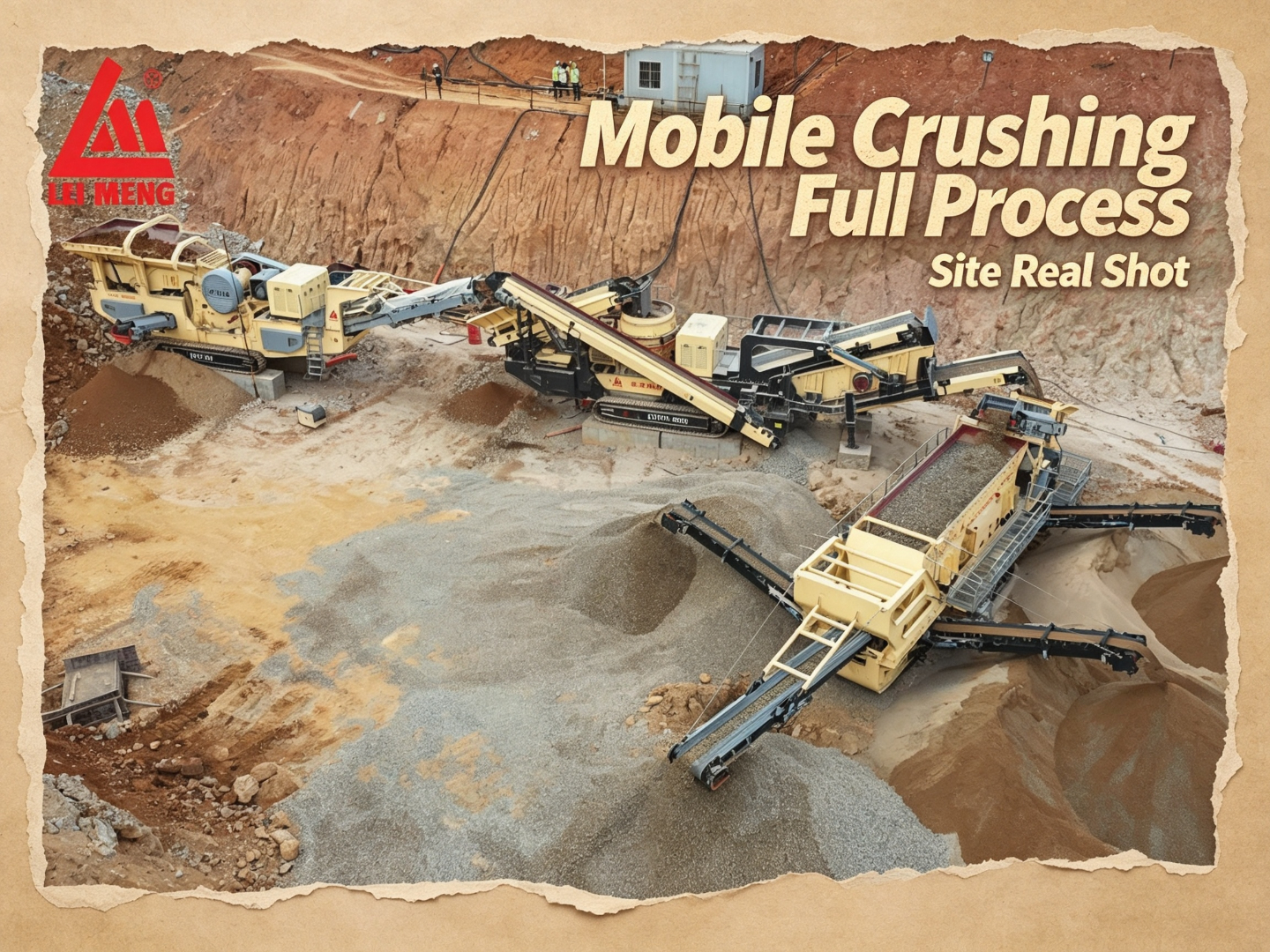
In this Leimeng project, the complete system consists of three tracked mobile units:

  1. A tracked jaw crusher for primary crushing
  2. A tracked cone crusher for secondary crushing
  3. A tracked horizontal screening plant for final screening

Instead of installing the crushing equipment on a permanent fixed foundation, each unit can operate independently on its own tracked chassis.

The three machines are connected as one complete process:

Feeding → Primary Crushing → Secondary Crushing → Screening → Finished Aggregate

The project provides a practical example of how tracked mobile equipment can be arranged for continuous on-site crushing and screening.


1. What Equipment Is Used in This Mobile Crushing Plant?

The production system uses three main machines.

Tracked Jaw Crusher

The tracked jaw crusher is positioned at the beginning of the crushing process.

An excavator loads raw material directly into the feeding section of the jaw crusher.

The jaw crusher then performs the primary crushing stage, reducing larger feed material before it is transferred to the next machine.

In a mobile crushing system, the jaw crusher is normally responsible for handling the largest feed size in the process.

Its main job is not to produce the final aggregate size directly, but to prepare the material for secondary crushing.


Tracked Cone Crusher

After primary crushing, the material is transferred to the tracked cone crusher.

The cone crusher performs the secondary crushing stage.

At the project site, material continuously enters the cone crusher while the complete system remains in operation.

The purpose of this stage is to further reduce the material and prepare it for final screening.

For aggregate production, the cone crusher is particularly important because its operating condition directly affects:

  1. Downstream screening load
  2. Material size distribution
  3. Final aggregate production
  4. Overall system efficiency

The cone crusher and screening plant therefore need to work as one coordinated system rather than as separate machines.


Tracked Horizontal Screening Plant

The third machine is the tracked horizontal screening plant.

After crushing, the material enters the screening section, where it is separated according to particle size.

The screening stage determines how the final crushed material is divided into different aggregate fractions.

This means the screening plant is not simply an auxiliary machine.

It is a key part of the final product control process.

A complete crushing plant may have sufficient crusher capacity, but if the screening section cannot process the material efficiently, the screening stage can become the production bottleneck.


2. How Does the Complete Crushing Process Work?

The real project follows a clear material flow.

Step 1: Excavator Feeding

The excavator loads raw material into the tracked jaw crusher.

Because the crushing equipment is positioned directly at the working site, the material can enter the crushing process close to the excavation area.

This can reduce the need to transport unprocessed material over long distances before crushing.


Step 2: Primary Crushing

The tracked jaw crusher reduces the large raw material into a smaller size.

This stage prepares the material for the cone crusher.

The stability of the primary crushing stage is important because irregular feeding can affect every downstream machine.

For this reason, continuous and controlled material flow is important for the entire mobile crushing system.


Step 3: Secondary Crushing

After primary crushing, the material enters the tracked cone crusher.

The cone crusher further reduces the material size.

This secondary crushing stage helps control the feed entering the final screening process.

When the crushing and screening stages are properly coordinated, the system can maintain a more stable material flow from one machine to the next.


Step 4: Final Screening

The crushed material finally enters the tracked horizontal screening plant.

The screen separates the material into the required size fractions.

Depending on the project configuration, screened material can then be discharged through different conveyors into separate stockpiles.

This completes the mobile crushing and screening process.


3. Why Use Three Separate Tracked Mobile Units?

One important advantage of this layout is flexibility.

Instead of combining every crushing and screening function into one machine, the project uses three independent tracked units.

This allows each crushing stage to be configured separately.

For example:

  1. The jaw crusher handles primary crushing
  2. The cone crusher focuses on secondary crushing
  3. The screening plant controls final sizing

This modular arrangement can make it easier to adjust the production process according to different project requirements.

If the raw material, required output or site conditions change, individual machines can be repositioned or reconfigured without rebuilding an entire fixed crushing plant.


4. What Are the Advantages of a Tracked Mobile Crushing Plant?

Tracked mobile crushing equipment is particularly useful where site conditions change frequently.

Flexible Site Deployment

Tracked machines can move within the working area without requiring permanent foundations for every operating position.

This is useful for quarry, mining and temporary aggregate production projects.


Crushing Close to the Material

One major benefit of mobile crushing is the ability to position the equipment closer to the raw material.

Instead of transporting all raw rock to a distant stationary plant, part of the crushing process can take place directly at the working face.

The actual benefit depends on the project layout, haul distance and operating conditions.


Modular Crushing Process

A three-unit configuration allows each machine to perform a clearly defined function.

This can make equipment selection and process adjustment more flexible than a single all-in-one machine.


Easier Relocation

When the working area changes, tracked equipment can be relocated more easily than a conventional fixed crushing line.

This is particularly relevant for projects where the crushing point changes as excavation progresses.


5. Tracked Mobile Crushing Plant vs. Stationary Crushing Plant

There is no single solution that is best for every quarry.

A stationary crushing plant is often suitable for projects with a fixed production location and long-term operating conditions.

A tracked mobile crushing plant is more suitable when mobility and site flexibility are important.

Project FactorTracked Mobile PlantStationary Plant
MobilityHighLow
Installation flexibilityHighLower
Permanent foundationReducedUsually required
RelocationEasierDifficult
Suitable for changing sitesYesLess suitable
Large permanent production basePossible, but depends on projectOften preferred

The correct choice depends on factors such as:

  1. Raw material
  2. Feed size
  3. Required capacity
  4. Finished product size
  5. Project duration
  6. Site conditions
  7. Distance between excavation and crushing area

This is why equipment selection should begin with the complete project conditions rather than with a crusher model alone.


6. When Is a Tracked Jaw + Cone + Screen Configuration Suitable?

A three-unit tracked crushing system can be considered when a project requires:

  1. Primary and secondary crushing
  2. Final aggregate screening
  3. Frequent relocation
  4. On-site crushing
  5. Flexible production layout
  6. Independent adjustment of different crushing stages

The combination of a jaw crusher + cone crusher + screening plant is especially useful when the process requires two-stage crushing followed by final sizing.

However, the exact configuration should still be selected according to the material characteristics and final product requirements.

For example, crusher selection may change depending on whether the project processes:

  1. Granite
  2. Basalt
  3. River stone
  4. Limestone
  5. Ore
  6. Construction waste

The correct solution cannot be determined from capacity alone.


7. What Information Is Needed Before Selecting a Mobile Crushing Plant?

Before selecting a tracked mobile crushing and screening system, the following project information should be confirmed.

Raw Material

Different materials have different hardness, abrasiveness and crushing characteristics.

Maximum Feed Size

The largest feed size affects the selection of the primary crusher.

Required Capacity

Production capacity determines the size and number of machines required.

Final Product Sizes

The required aggregate fractions affect both crusher settings and screening configuration.

Project Location and Site Conditions

Terrain, road access, working space and relocation requirements can affect equipment layout.

Required Mobility

Some projects need frequent movement, while others remain in the same operating area for long periods.

These factors should be evaluated together before the final machine configuration is selected.


Frequently Asked Questions

What machines are included in this tracked mobile crushing project?

The system uses three tracked units: a tracked jaw crusher, tracked cone crusher and tracked horizontal screening plant.

What is the crushing process?

The process follows:

Feeding → Jaw Crushing → Cone Crushing → Screening → Finished Aggregate

The jaw crusher performs primary crushing, the cone crusher performs secondary crushing, and the screening plant separates the final material by size.

Why use a jaw crusher before a cone crusher?

The jaw crusher handles larger raw material during primary crushing.

The cone crusher then receives the smaller material and performs secondary crushing.

This allows each crusher to operate within a more suitable crushing stage.

What does the mobile screening plant do?

The screening plant separates crushed material into different size fractions.

It is responsible for final aggregate sizing before the material is discharged into stockpiles.

Can tracked crushers move around the quarry?

Yes.

Tracked mobile crushing equipment is designed for relocation within the working site, although actual mobility depends on terrain and site conditions.

Is a tracked mobile plant better than a stationary plant?

Not always.

Tracked plants are particularly useful when mobility, flexible deployment and changing working areas are important.

Stationary plants may be more suitable for long-term production at a permanent site.

The choice should be based on the complete project conditions.

What information should be provided when requesting a mobile crushing solution?

For preliminary equipment selection, provide:

  1. Raw material
  2. Maximum feed size
  3. Required capacity
  4. Finished product sizes
  5. Project location
  6. Site conditions

This information allows the engineering team to evaluate the crushing stages and recommend a suitable configuration.


Planning a Mobile Crushing and Screening Project?

A mobile crushing plant should not be selected by looking at one crusher alone.

The jaw crusher, secondary crusher, screening equipment, conveyors and material flow need to work as one complete system.

This real three-unit project demonstrates a typical tracked configuration:

Tracked Jaw Crusher + Tracked Cone Crusher + Tracked Horizontal Screening Plant

If you are planning a quarry, mining or aggregate production project, send Leimeng Group your:

raw material + maximum feed size + required capacity + final product sizes + project location

Our engineering team can recommend a tracked mobile crushing and screening solution based on the actual site conditions.

Leimeng Group

Crushing · Screening · Mobile Crushing Solutions

www.lmcrusher.com

‹ Back to News