
Aggregate Shape: How to Reduce Flaky Particles
What Causes Flaky Aggregate and How Can You Fix It?
Finished aggregate can meet the required size range and still fail a particle shape test. Too many flaky and elongated particles can leave a plant with stockpiles that do not meet the client’s specification.
Start by identifying which product size fails and where the problem develops. Check the rock, cone crusher feeding, chamber selection and liner condition before considering additional equipment. If shaping is still needed, compare impact crushing and VSI options against both shape requirements and saleable product yield.
Why Aggregate Shape Matters
Flaky particles are thin relative to their other dimensions. Elongated particles are disproportionately long. Exact classifications depend on the specified test method.
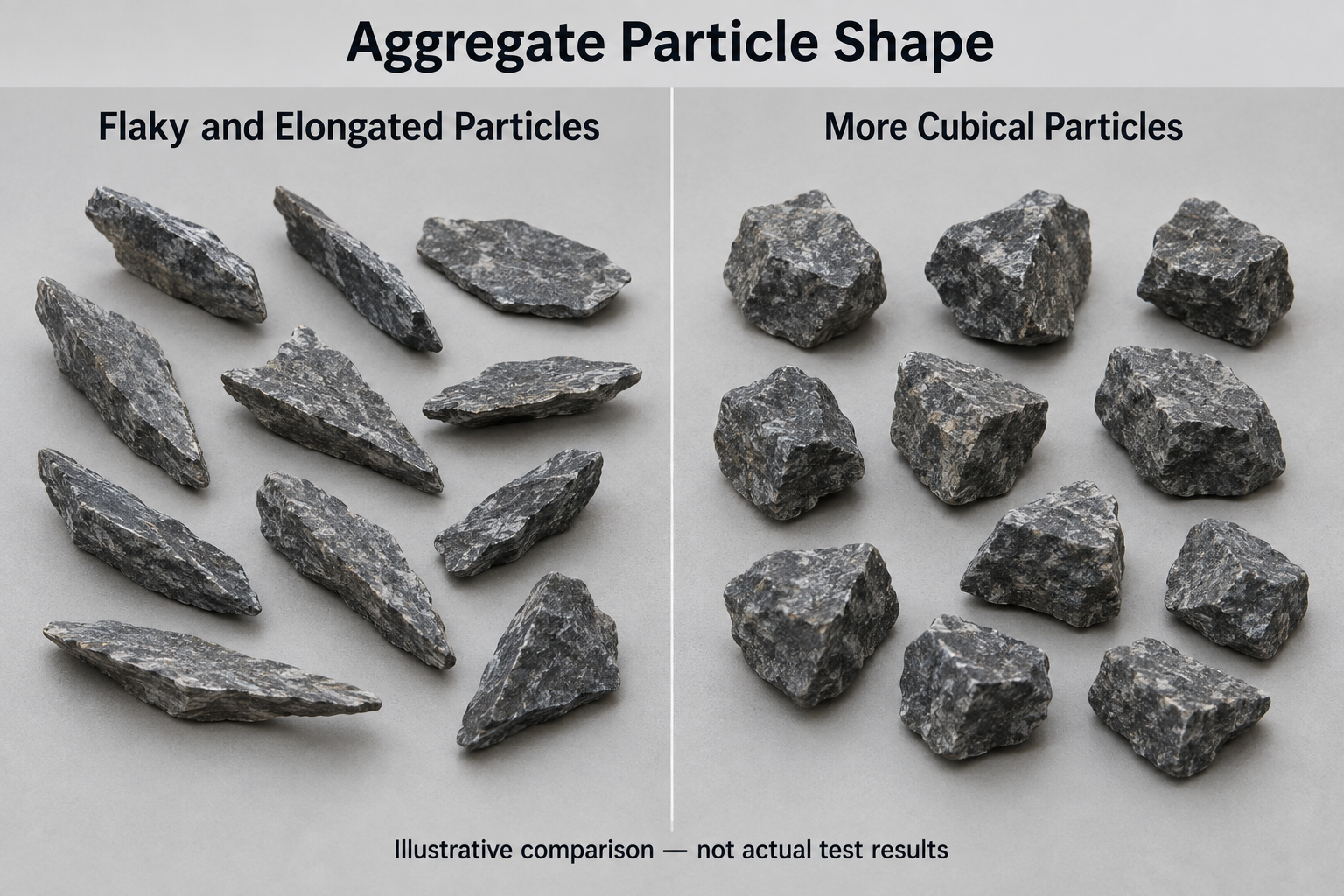
Excessive amounts can make aggregate harder to compact and may increase the risk of particle breakage during handling or compaction. In concrete, unfavorable particle shape can also increase paste demand for a given workability.
However, cubical shape alone does not make an aggregate suitable for a project. Grading, strength, abrasion resistance, cleanliness and the relevant application requirements still matter.
Particle size and particle shape are separate quality checks. A stone can pass through a production screen and still fail a shape test.
Start by Finding Where the Problem Appears
Before changing crusher settings, collect representative samples from:
- The secondary crusher discharge.
- The final crusher or shaping stage discharge.
- Each finished aggregate size fraction.
Compare equivalent size fractions using the same test method. A combined sample may hide a problem concentrated in one product.
For example, if a plant produces nominal 5–10 mm and 10–20 mm aggregate, check both products separately. These are illustrative product sizes, not universal grading specifications.
Also record whether the problem started after a change in quarry face, crusher liners, feed rate or operating settings.
| What you observe | What to investigate first |
| Shape changes after moving to another quarry face | Rock structure, weathering and material variability |
| Product shape fluctuates during the shift | Feed interruptions, segregation and uneven chamber loading |
| Shape deteriorates as liners wear | Cavity profile, actual discharge setting and uneven wear |
| Crusher discharge is acceptable, but the stockpile fails | Bypass streams, product mixing and stockpile contamination |
| Only one size fraction fails | Shape distribution by size and routing of that fraction |
| Shape improves, but coarse aggregate output falls | Excessive breakage and conversion into finer products |
This comparison helps separate a crushing problem from a product-handling problem.
What Causes Flaky and Elongated Aggregate?
1. The Rock Breaks Along Layers or Weak Planes
Some rocks split readily along bedding, foliation or existing fractures. This can produce flat fragments even when the crusher is operating normally.
Rock names alone are insufficient for predicting this behavior. Two deposits sold as the same material may respond differently because their texture, mineral composition and weathering differ.
When a new quarry face causes a sudden quality change, examine representative feed samples before replacing equipment. Where possible, compare crushing trials from the different material zones.
2. The Cone Crusher Receives Unstable or Uneven Feed
Cone crusher product shape depends partly on how material enters and fills the chamber. Intermittent feeding, an underfilled cavity or material concentrated on one side can impair product quality. Underfeeding can contribute to flaky and elongated output.
Check the surge capacity, feeder control and feed chute arrangement. Aim for stable, evenly distributed feeding at the chamber level recommended for the machine.
Choke feeding means maintaining an appropriate material bed. It does not mean overloading the crusher.
3. The Chamber and Settings Do Not Match the Duty
A chamber selected to accept coarse feed in the secondary stage may not suit a finer finishing duty. Check whether the cavity matches the actual feed grading and required product.
Review feed grading, cavity selection and the closed-side setting, or CSS. CSS influences product grading, capacity and power demand, so reducing it should be treated as a controlled adjustment rather than an automatic cure for poor shape.
Also inspect the mantle and concave. Unevenly worn profiles can change crushing conditions even when the displayed setting appears unchanged.
4. Too Much Size Reduction Is Assigned to One Stage
A plant may ask one crusher to accept a broad, coarse feed and produce a small finished product. This can make it difficult to balance throughput, wear and shape.
Review how the reduction duty is divided between stages. Improving upstream preparation or adding a suitable finishing stage may be more effective than repeatedly tightening the final crusher.
The required number of stages depends on the material, feed size and product specification.
5. The Circuit Allows Poorly Shaped Material into Finished Products
A conventional production screen separates mainly by particle size. It does not certify that every passing particle has acceptable shape.
Flat particles may pass an opening in a favorable orientation. Similarly, an unshaped bypass stream can reduce the quality of aggregate that has already passed through a finishing stage.
Check where each stream goes. Closed-circuit crushing can help control size and reprocess returned material, but the final product still needs shape testing.
Cone Crusher, Impact Crusher or VSI: Which Solution Fits?
These machines perform different duties. Equipment selection should consider the required improvement, feed characteristics and the value of the finished products.
| Equipment | Where it fits | Main quality controls | Trade-off to evaluate |
| Cone crusher | Secondary or tertiary crushing, commonly for hard and abrasive rock | Feed distribution, chamber selection, CSS and liner condition | Shape depends on operating conditions and circuit design |
| Horizontal-shaft impact crusher | Crushing suitable low-abrasion material where particle shape matters | Feed grading, blow-bar condition, apron gaps and approved rotor speed | Abrasive feed can increase wear costs |
| VSI crusher | Final shaping of suitably sized feed, with optional manufactured sand production | Feed size, rotor condition, configuration and operating speed | Shaping can increase fines and reduce coarse-product yield |
Which option should you assess first?
If the plant already uses a cone crusher, start with its operating conditions and test the product again after correction. If shape remains unacceptable, assess the material’s abrasiveness and the affected size fractions. An impact crusher may suit a crushing duty with low-abrasion feed, while a VSI may suit a separate finishing stage for correctly sized material. Confirm the choice through representative trials, including the effect on fines and coarse aggregate yield.
Improve the Existing Cone Crusher First
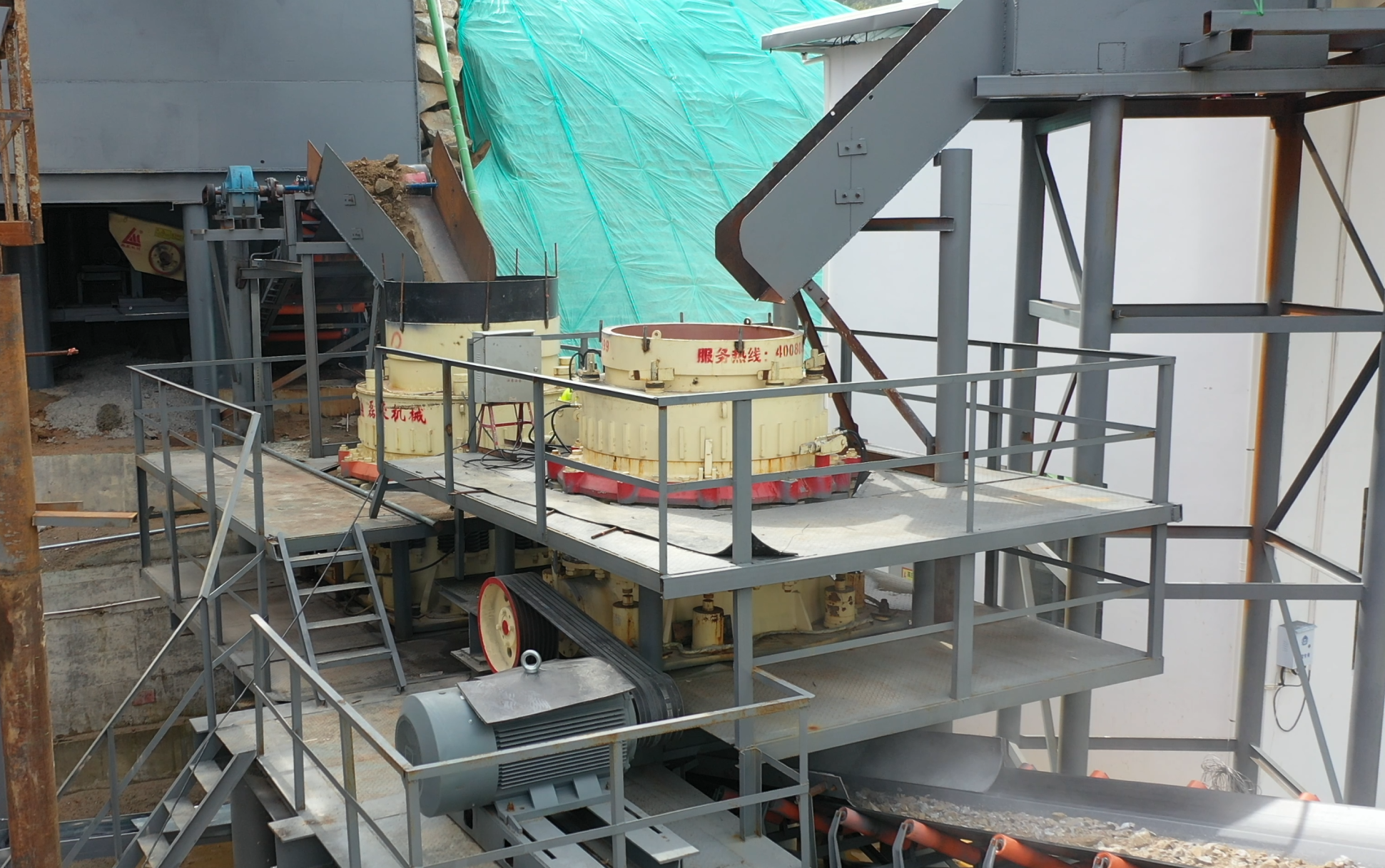
A cone crusher can produce well-shaped aggregate under suitable conditions. Before purchasing another machine, correct unstable feeding, confirm the chamber selection and check whether worn liners need replacing.
Retest each finished size fraction after the adjustments. If the product meets the requirement, an additional shaping stage may be unnecessary.
Consider an Impact Crusher for Suitable Material
A horizontal-shaft impact crusher uses rotor-mounted blow bars and impact surfaces to break the feed. It can produce a more cubical product and may combine size reduction with shape improvement.
For suitable low-abrasion limestone, this makes an impact crusher worth evaluating. However, highly abrasive feed, such as quartz-rich material, can accelerate wear and increase operating costs.
Check the actual feed properties rather than selecting equipment from the rock name alone.
Add VSI Shaping When Final Quality Requires It
A VSI crusher is worth evaluating when the existing circuit achieves the required size but still struggles with particle shape.
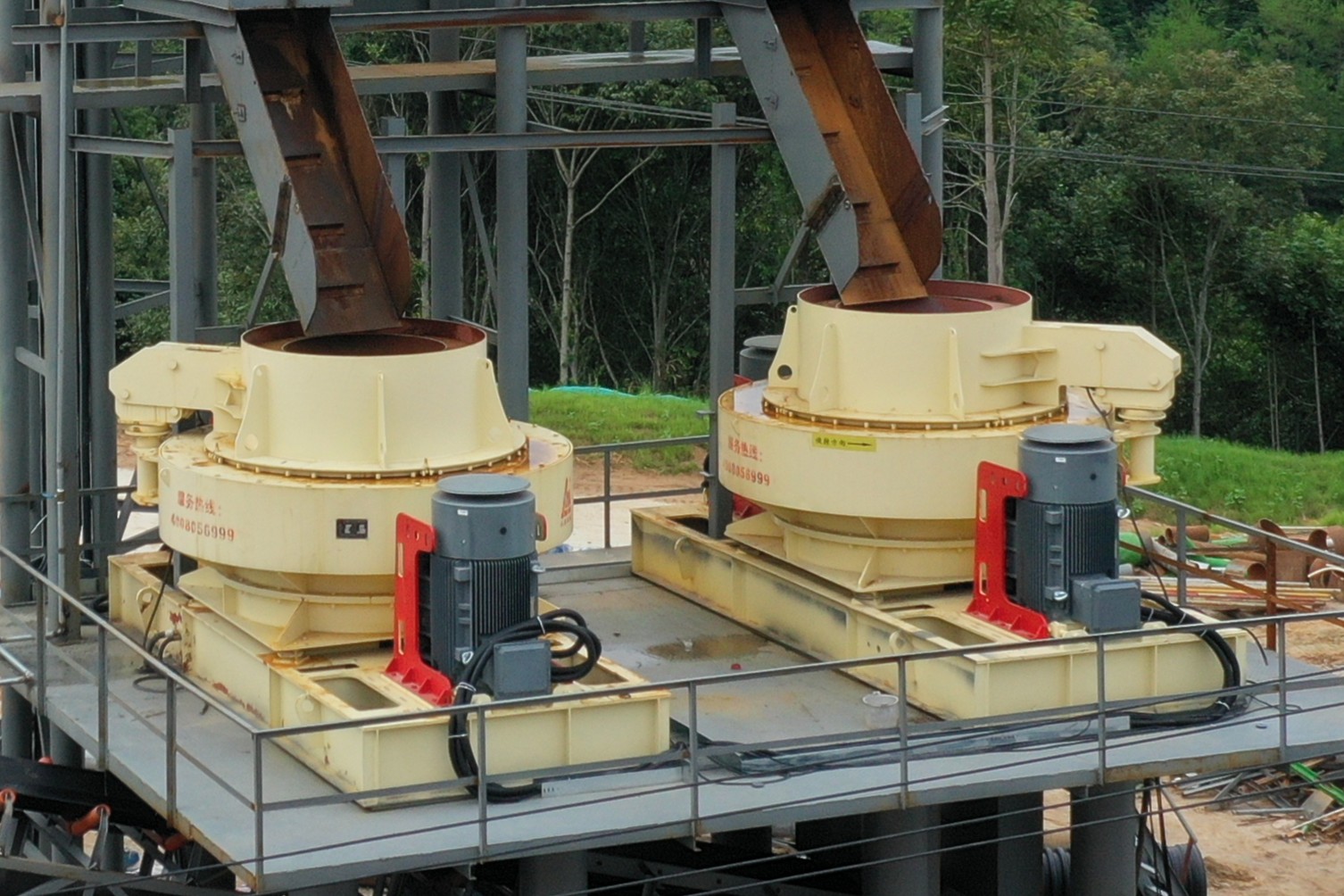
Depending on its configuration, the machine uses rock-on-rock or rock-on-anvil impact. Feed grading, rotor speed and material properties influence the result. Increasing speed can improve shaping, but it can also increase wear and change throughput and product grading. Keep speed adjustments within the manufacturer’s approved range and verify the results through sampling.
For coarse aggregate production, assess whether only the affected size fraction needs shaping. Confirm that this fraction fits the VSI feed limits, then rescreen the discharge.
This avoids unnecessarily reprocessing material that already meets the specification.
Improve Shape Without Losing Too Much Saleable Product
Breaking a flaky particle may produce a better-shaped particle, smaller fragments, or both. Consequently, a lower flakiness result does not automatically mean a more profitable plant.
Compare these measures before and after each trial:
- Shape results for each saleable size fraction.
- Tonnes per hour of compliant finished aggregate.
- Changes in grading and fines production.
- Power consumption and wear cost per saleable tonne.
- Return load and screen performance.
The useful production target is compliant product output, not simply tonnes passing through the crusher.
Adjust one operating variable at a time and allow conditions to stabilize before sampling. Keep the material source and test procedure as consistent as possible so the comparison remains meaningful.
Leimeng Solutions for Better Aggregate Shape
For a client facing excessive flaky and elongated particles, the starting point is the existing process and the required product quality.
An assessment may identify a need to improve cone crusher feeding and chamber selection, evaluate impact crushing for suitable material, or introduce VSI shaping for selected fractions.
To discuss a suitable configuration, send Leimeng:
- Your raw material, project location and required capacity.
- The current crusher models, process layout and feed size.
- Finished product sizes, intended use and shape-test requirements.
- Recent test results and photos of the feed and finished aggregate.
These details provide a starting point for assessing the existing crushing stages and whether additional shaping is needed.
FAQ
Why is my aggregate flaky even though its size is correct?
Size and shape are different properties. Thin or elongated particles can pass production screens while still failing the specified shape test.
Can a cone crusher produce cubical aggregate?
Yes. Results depend on the rock, chamber, feeding conditions, settings and liner condition. Check these factors before assuming the crusher needs replacing.
Does reducing CSS always improve aggregate shape?
No. It changes crushing conditions and product grading, but the result depends on the application. Verify the effect through sampling while monitoring load and output.
Is a VSI crusher only used to make sand?
No. A VSI can also shape suitably sized aggregate. Its configuration and operating conditions determine how much material remains as coarse aggregate or becomes finer product.
What is an acceptable flakiness level?
Use the limit and test method specified for the project. Requirements vary by application and market, so a single percentage should not be applied to every aggregate product.