
Multi-Cylinder Cone Crusher: H(M)PY for Hard Rock
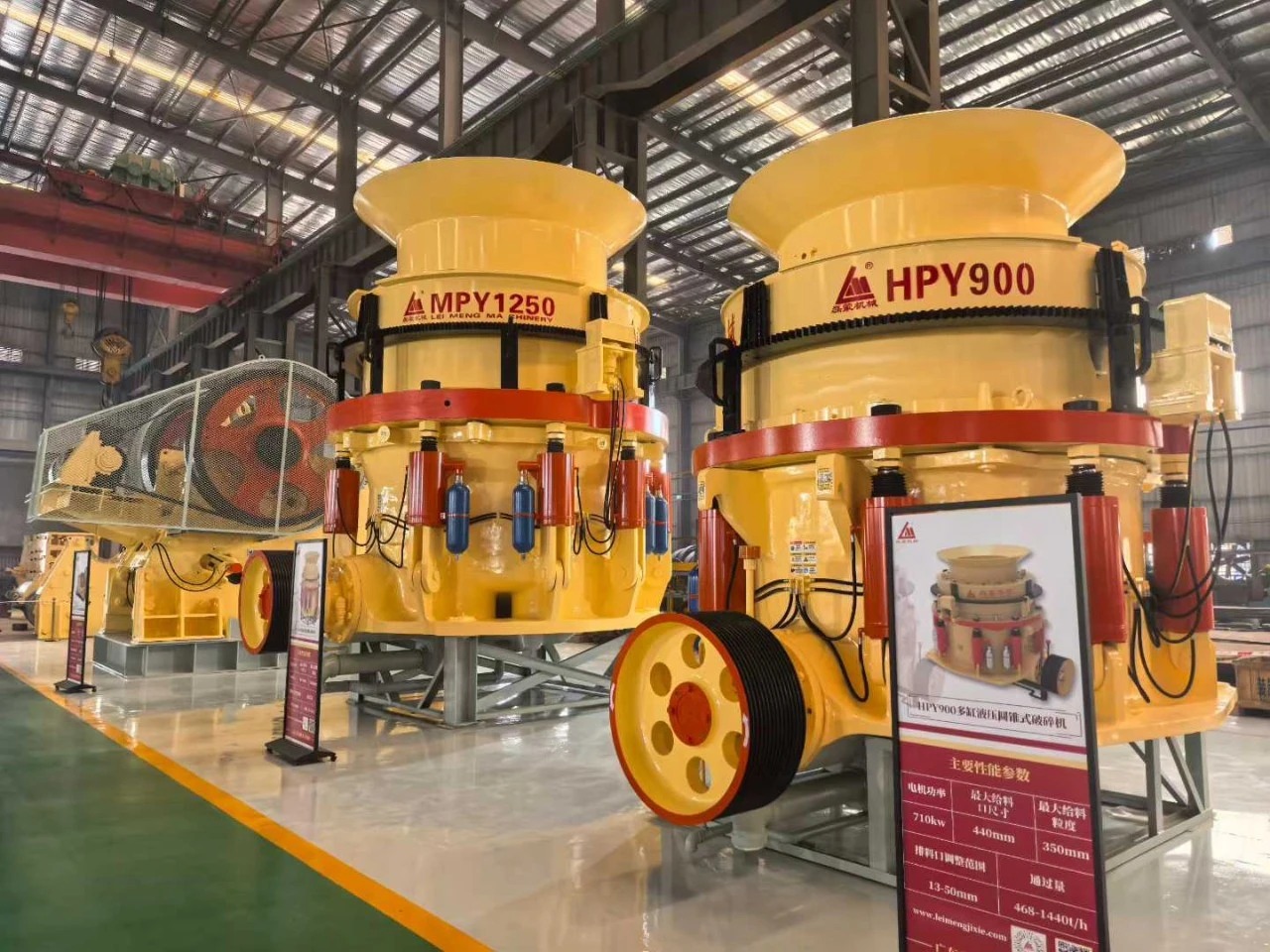
H(M)PY Multi-Cylinder Hydraulic Cone Crusher for Hard Rock Crushing
Leimeng Group H(M)PY Series multi-cylinder hydraulic cone crusher is designed for secondary and fine crushing of hard and abrasive materials such as granite, basalt, river pebble, diabase and metal ores. With laminated crushing, multi-cylinder hydraulic control and automatic discharge adjustment, it helps aggregate and mining plants improve capacity, particle shape and long-term operating stability.
In a hard rock crushing line, the cone crusher is not only responsible for reducing size. It also affects the screening load, finished aggregate quality, wear cost and overall plant efficiency. For large quarry and mining projects, the right cone crusher can make the difference between unstable operation and steady high-capacity production.
UNEP reports that the world uses about 50 billion tonnes of sand and gravel every year, making aggregates one of the most consumed resources after water. As demand for high-quality construction materials continues, aggregate producers need equipment that can support stable output, better particle shape and more efficient long-term operation.
What Is the H(M)PY Series Cone Crusher?
The H(M)PY Series is Leimeng Group’s multi-cylinder hydraulic cone crusher range for secondary and fine crushing applications. It uses compression crushing: material is crushed between the mantle and concave inside the chamber, then discharged when it reaches the required size.
Compared with impact crushing, cone crushing is better suited for hard and abrasive materials because it offers stronger wear control and more stable continuous operation. In a typical hard rock aggregate plant, H(M)PY can be installed after a jaw crusher and before final screening, VSI shaping or sand washing.
Typical process flow: Feeding -> Jaw Crusher -> H(M)PY Cone Crusher -> Vibrating Screen -> VSI Sand Maker / Sand Washing System
Key Features of the H(M)PY Series
- Laminated crushing to improve crushing efficiency and finished particle shape.
- Multi-cylinder hydraulic system for locking, discharge adjustment, cavity clearing and tramp iron protection.
- Optimized crushing chamber for continuous, high-load operation.
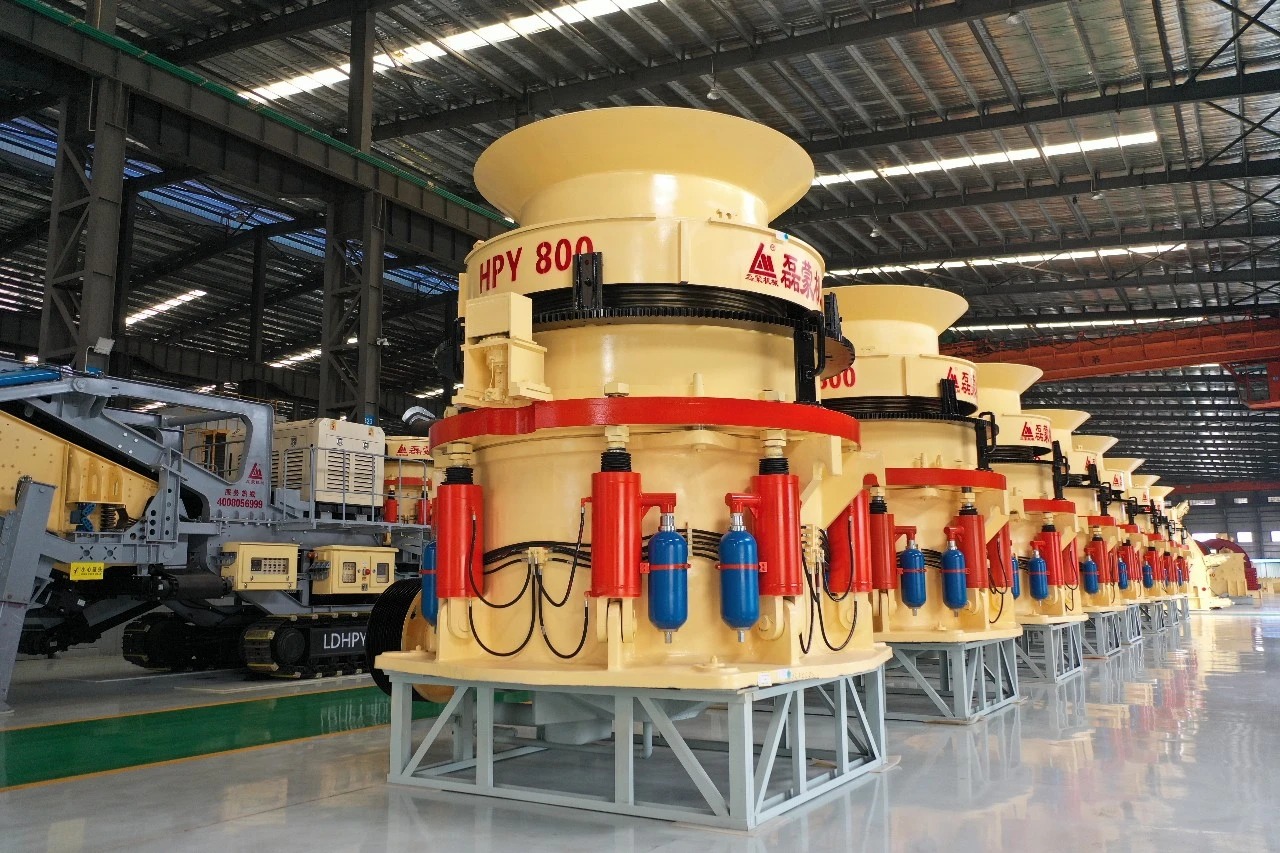
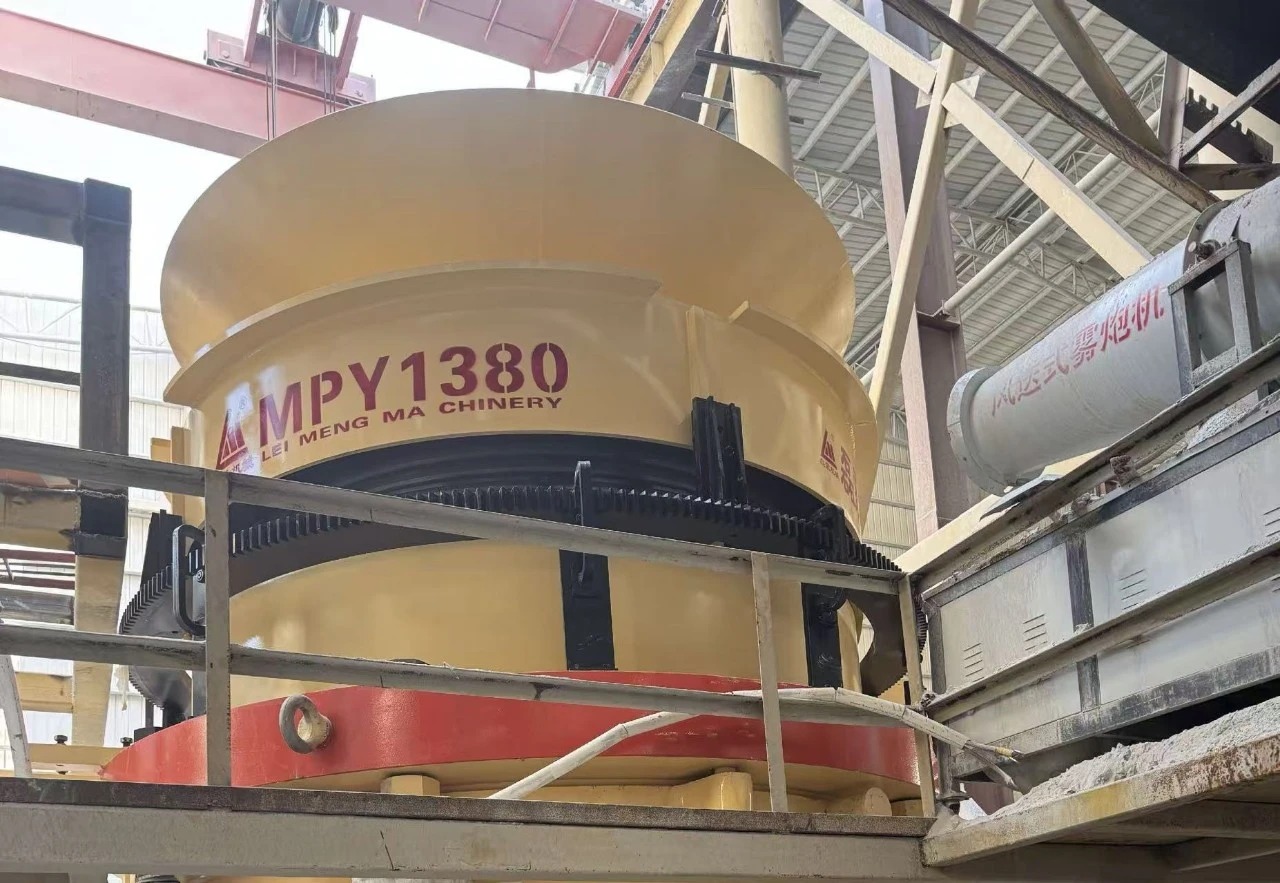
- Wide model range from HPY200 to MPY1380 for different project scales.
- Single-machine capacity can exceed 3,000 t/h in selected large configurations, depending on material and working conditions.
- Suitable for aggregate production, metal ore crushing, cement raw material crushing and infrastructure projects.
Why Cone Crusher Selection Should Start with the Material
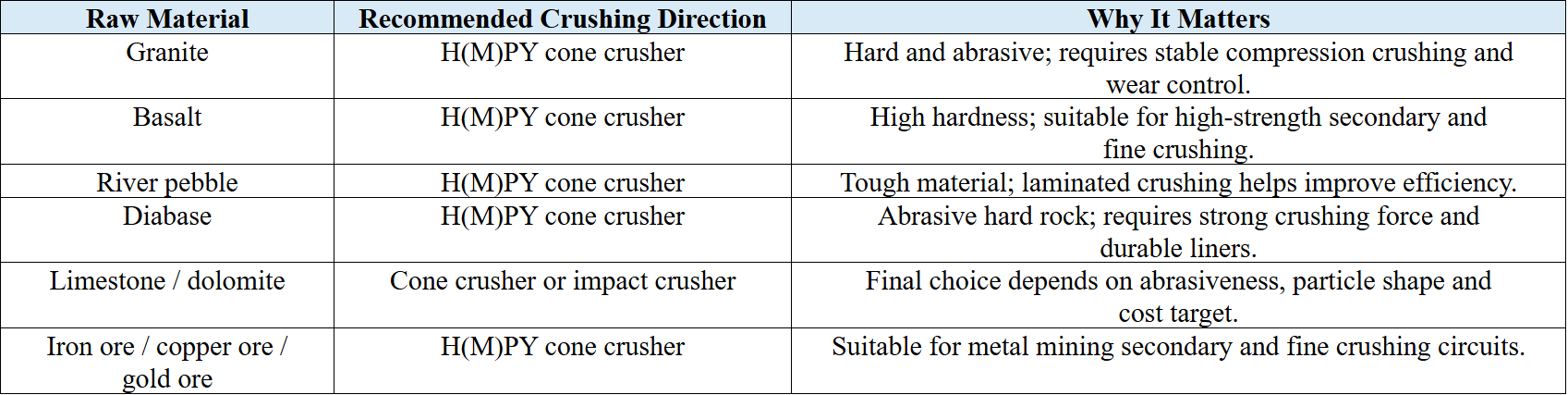
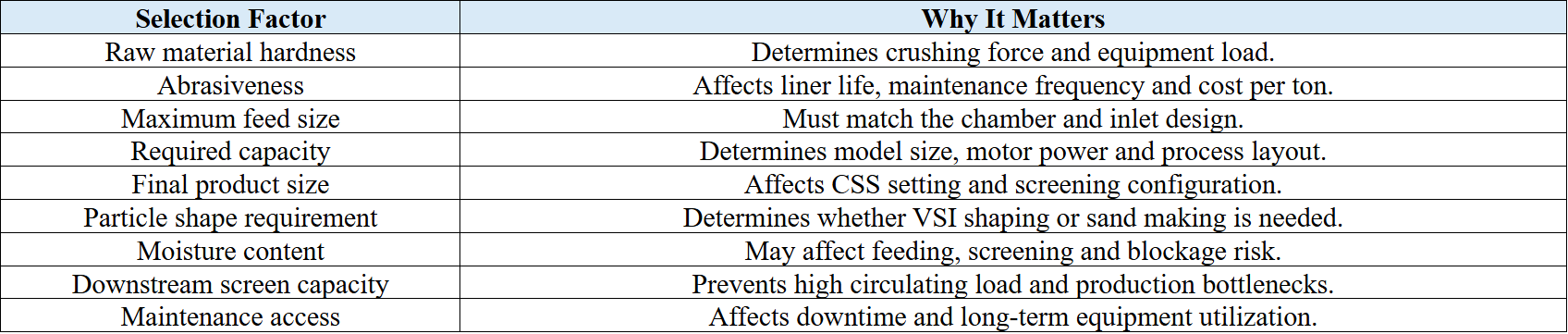
A practical crusher selection should start with the raw material, not the model number. Hardness, abrasiveness, feed size, moisture content and final product requirements all affect the crusher configuration.
For limestone, an impact crusher may be considered when the material is low-abrasive and cubical shape is the main target. For granite, basalt, river pebble, diabase and metal ores, a multi-cylinder hydraulic cone crusher is usually a more suitable secondary or fine crushing choice because it offers better wear control under long working hours.
Laminated Crushing for Better Efficiency and Particle Shape
H(M)PY Series adopts laminated crushing. When the crushing chamber is properly filled, material is compressed not only by the mantle and concave, but also between particles. This rock-on-rock compression helps improve crushing efficiency and reduce flaky and elongated particles.
For aggregate producers, particle shape is not a small detail. Cubical aggregate can support better concrete workability, asphalt mixture quality and final product value. In projects such as highways, railways, airports, water conservancy projects and high-grade concrete production, finished aggregate quality is often a key selection factor.
Hydraulic Control for Safer and More Stable Operation
In modern quarry and mining sites, unexpected downtime can be more costly than daily power consumption. The H(M)PY Series uses a complete multi-cylinder hydraulic control system to reduce shutdown risk and make adjustment faster.
- Hydraulic locking keeps the crusher stable during operation.
- Automatic discharge opening adjustment helps control final product size.
- Hydraulic cavity clearing shortens the time needed to restart after blockage.
- Tramp iron protection helps protect key components when uncrushable material enters the chamber.
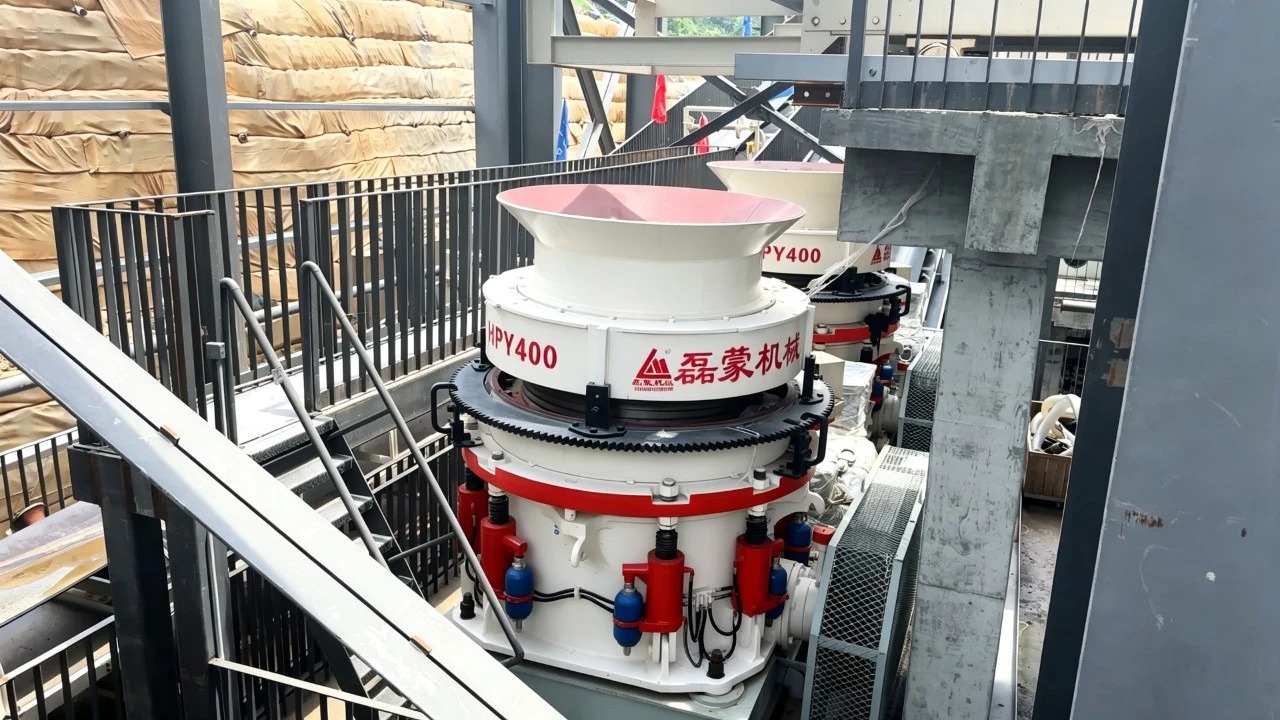
These functions are especially important in large aggregate and metal mining projects where the crusher often works under continuous feed and high load.
H(M)PY Model Range: HPY200 to MPY1380
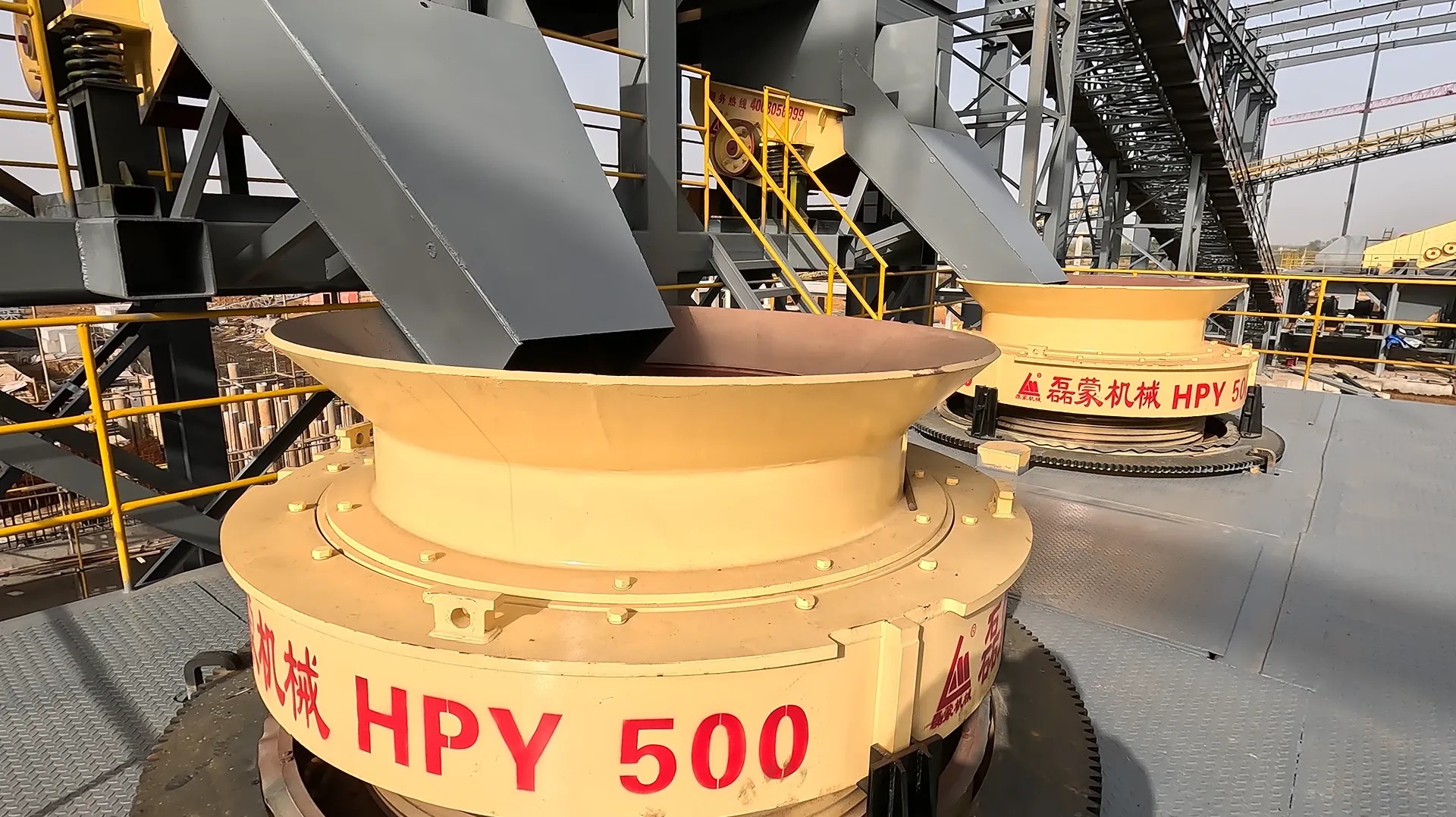
The H(M)PY Series covers a wide range of models for different production scales:
HPY200, HPY300, HPY400, HPY500, HPY800, HPY900, MPY1000, MPY1250 and MPY1380.
In selected large configurations, single-machine capacity can reach more than 3,000 t/h. Actual capacity should be confirmed according to feed size, chamber type, closed side setting, material hardness, moisture content, screen efficiency and circulating load.
Secondary and Fine Crushing: Where H(M)PY Fits in the Line
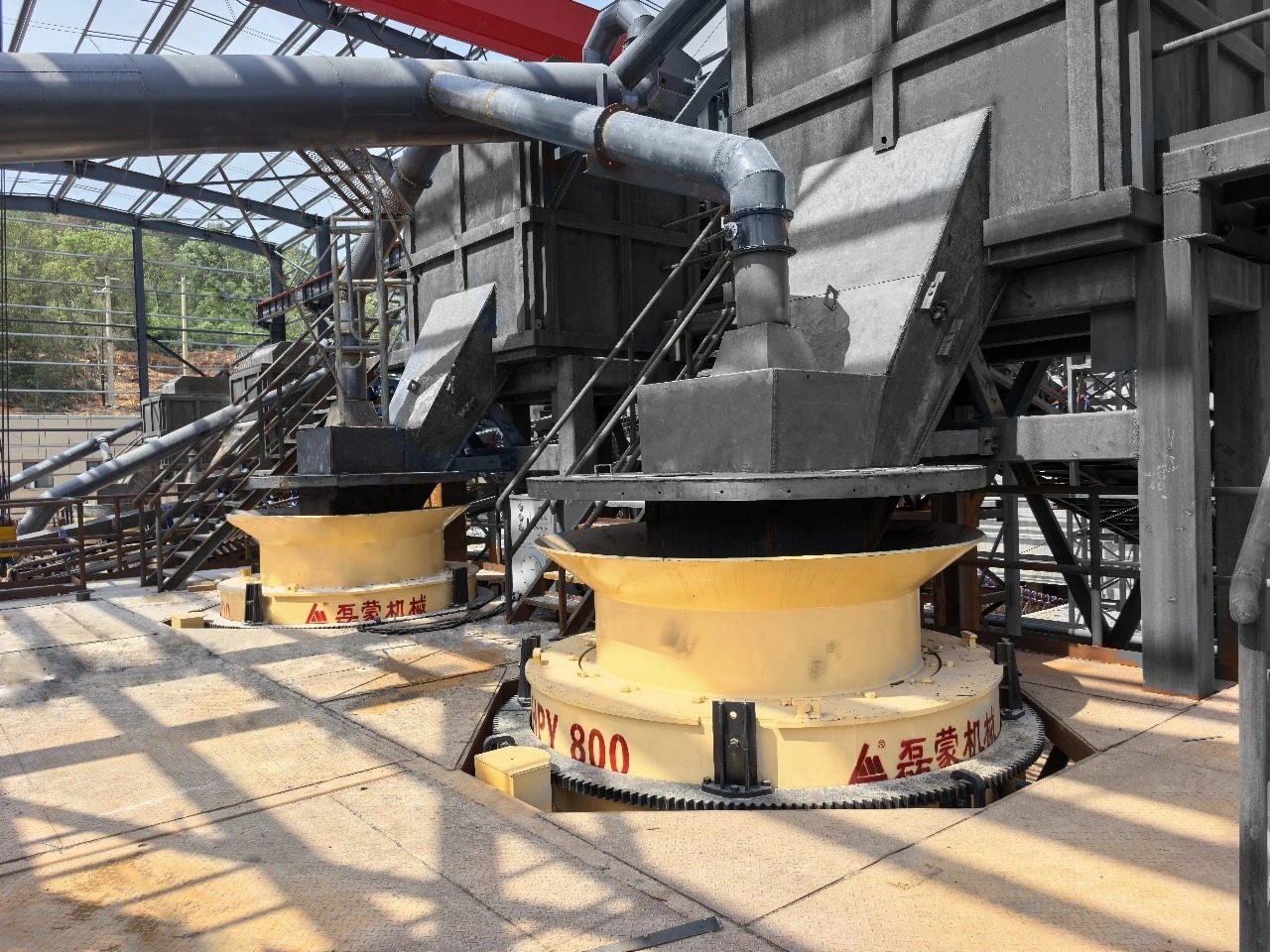
In aggregate production, H(M)PY can be used as a secondary crusher after a jaw crusher, or as a fine crusher before final screening, shaping or sand making. The chamber type and CSS setting should be selected according to feed size, capacity and final aggregate requirements.

Cone Crusher and Vibrating Screen Should Be Matched Together
A cone crusher should not be selected as an isolated machine. In a closed-circuit aggregate plant, the vibrating screen controls final product size and circulating load. If the screen capacity is too small, qualified material may return to the crusher unnecessarily, increasing energy use and liner wear.
Before selecting an H(M)PY model, the whole process should be reviewed, including CSS setting, screen deck size, screen opening, number of final aggregate sizes, return material ratio and whether VSI shaping or sand washing is required.
How to Choose the Right H(M)PY Cone Crusher
Choosing the right H(M)PY model should be based on the full crushing and screening process, not only the rated capacity. The following factors should be reviewed before final selection.
When Should You Choose the H(M)PY Series?
H(M)PY is a practical choice when the project requires stable secondary or fine crushing for hard and abrasive materials. It is especially suitable for plants that need high capacity, better particle shape, hydraulic protection and lower long-term wear cost.
For soft and low-abrasive materials where a higher reduction ratio and cubical shape are the main targets, an impact crusher may also be considered. The final choice should depend on material abrasiveness, capacity, final product requirements and operating cost expectations.
Suitable Applications
- Granite aggregate production lines.
- Basalt aggregate production lines.
- River pebble and diabase processing.
- Limestone and dolomite quarry projects.
- Iron ore, copper ore and gold ore crushing.
- Cement raw material crushing.
- Highway, railway, airport and water conservancy aggregate projects.
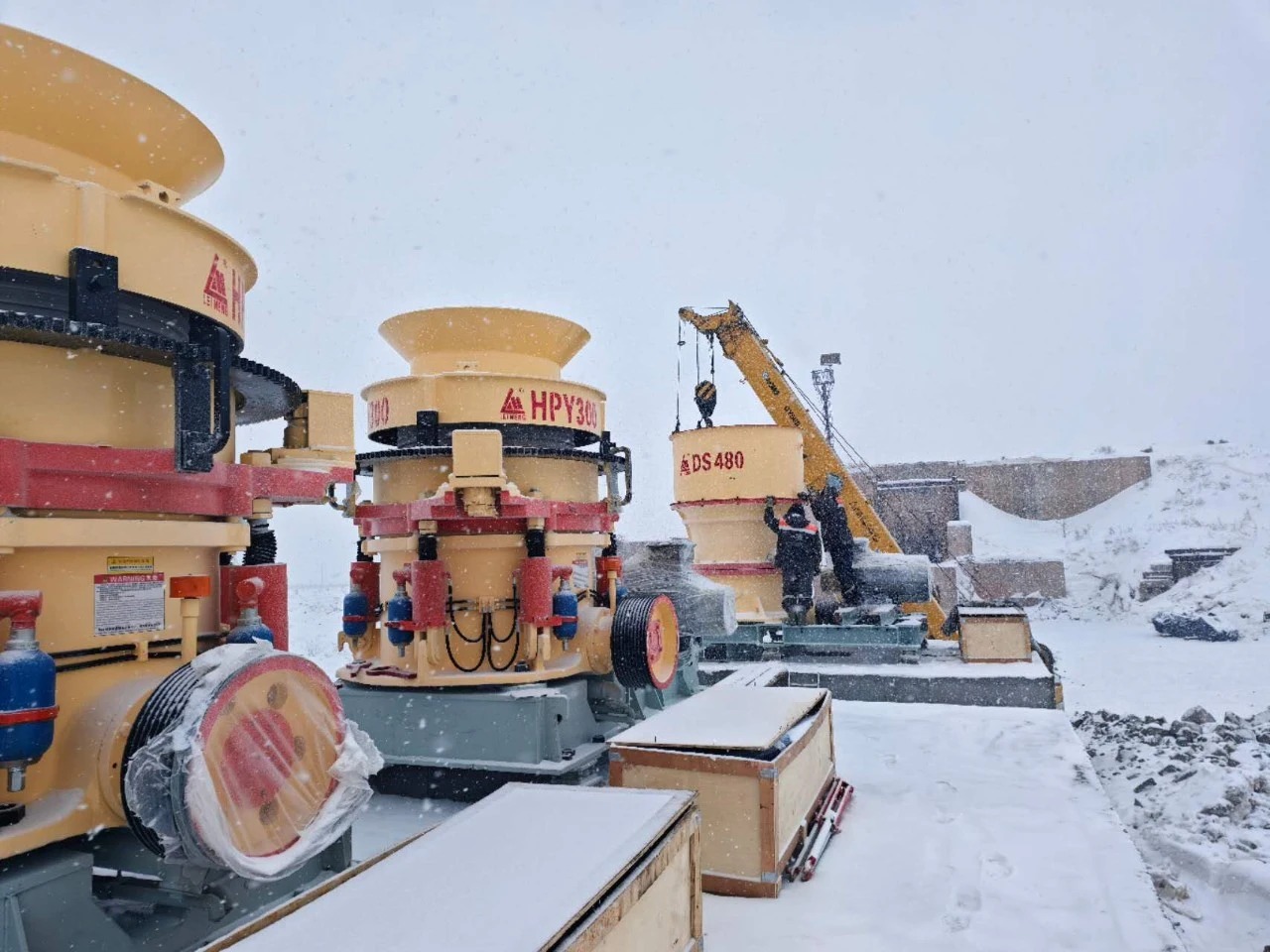
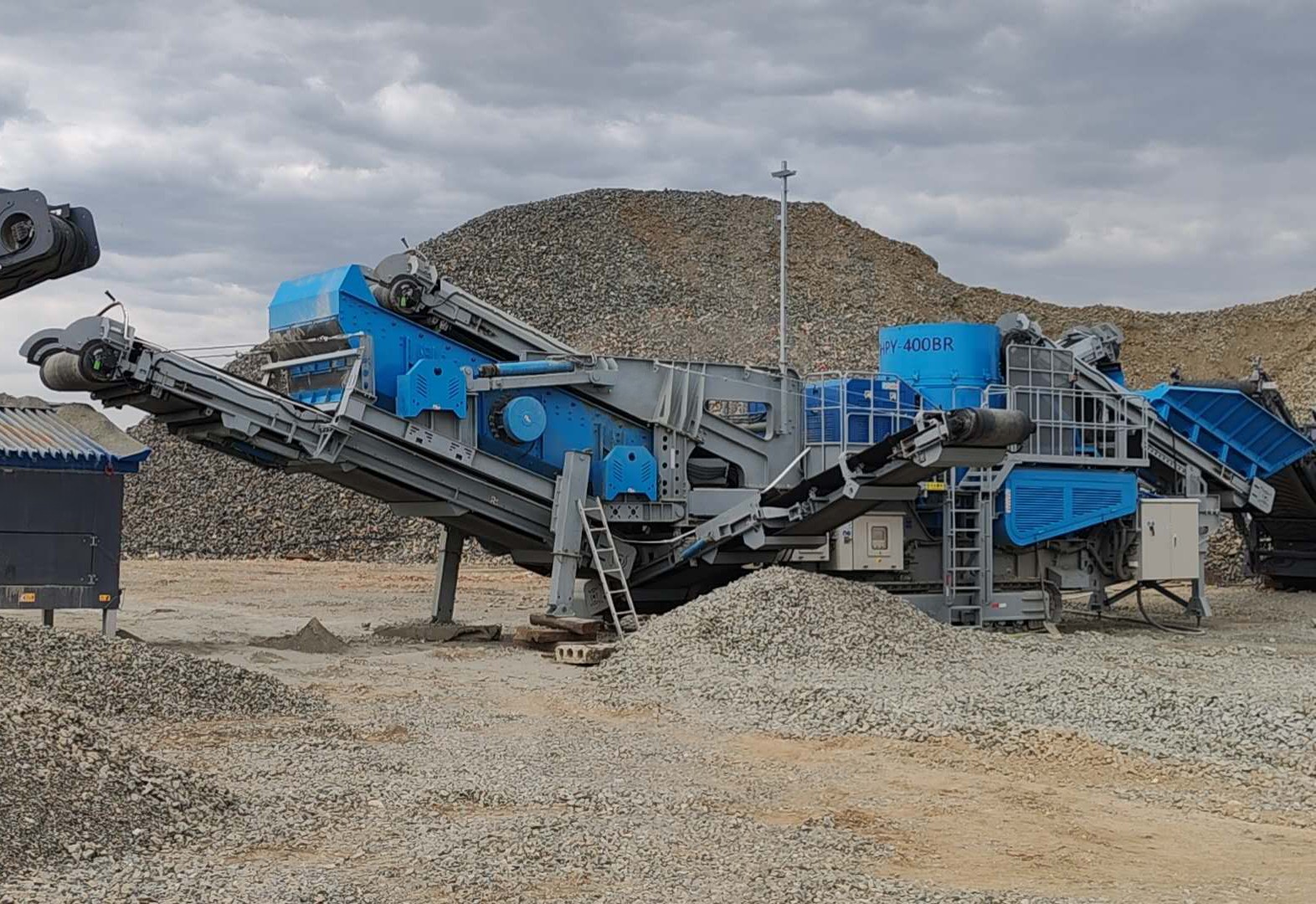
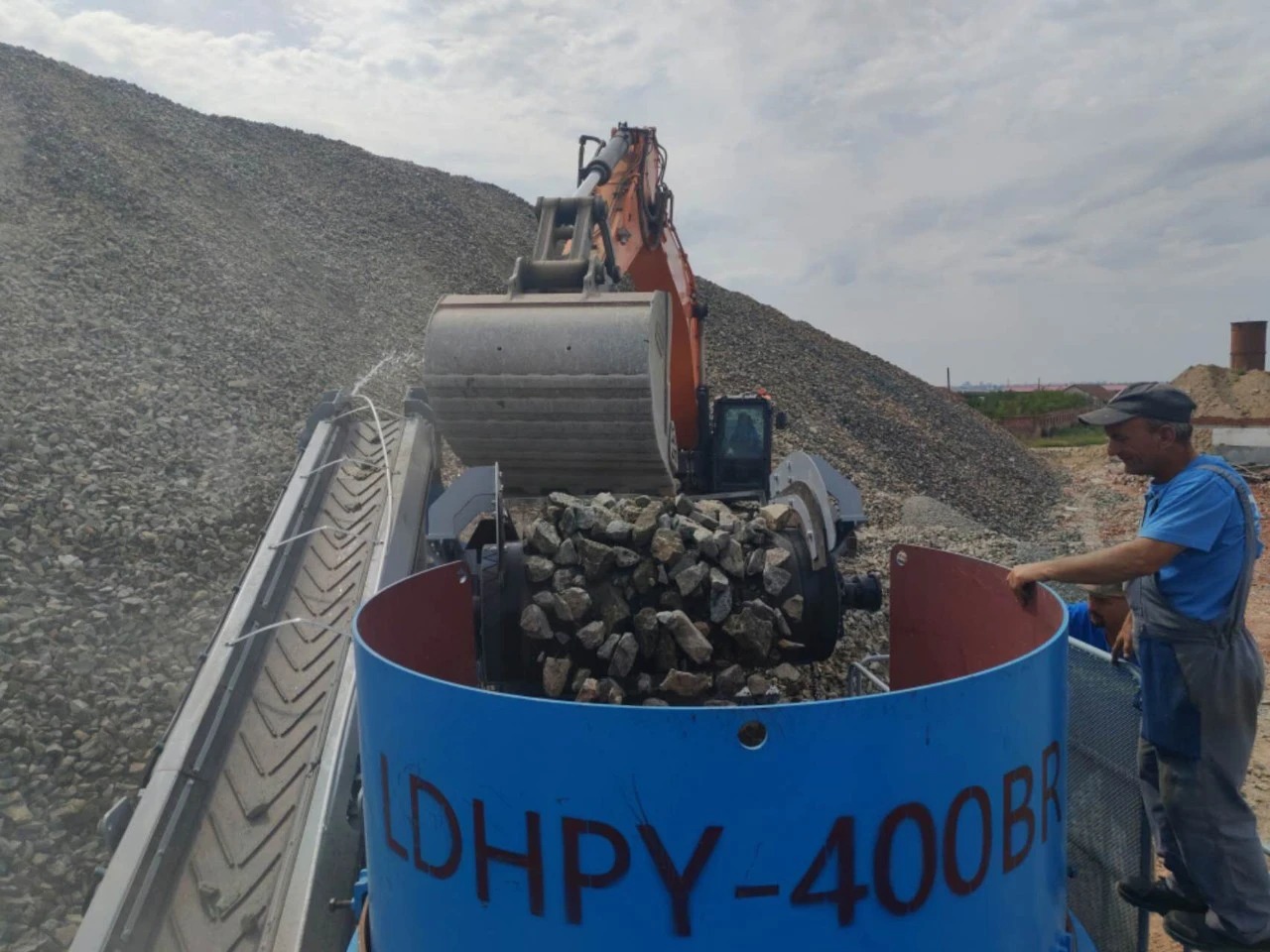
H(M)PY Cone Crusher in Mobile Crushing Applications
How Leimeng Supports Complete Crushing Solutions
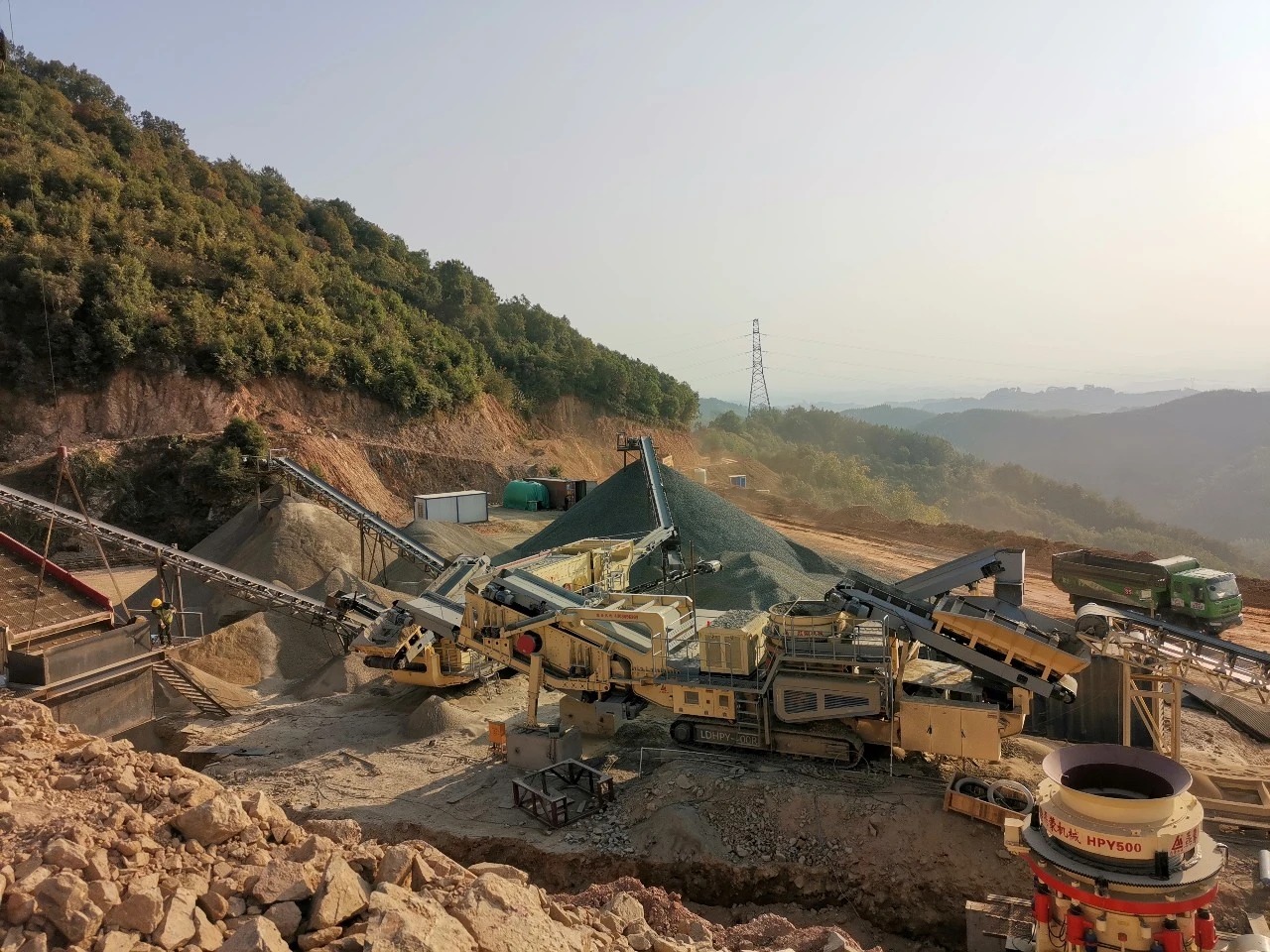
A cone crusher performs best when it is part of a properly designed production line. Leimeng Group provides jaw crushers, cone crushers, impact crushers, vibrating screens, sand-making equipment, mobile crushing plants and complete crushing and screening solutions.
Based on the client’s raw material, capacity target, feed size, final aggregate size and site conditions, Leimeng can recommend a suitable process flow and equipment configuration. For overseas aggregate and mining clients, the support can include process design, equipment selection, installation guidance, commissioning support and after-sales service.
FAQ
What does H(M)PY refer to?
H(M)PY refers to Leimeng Group’s multi-cylinder hydraulic cone crusher series, covering different models for secondary and fine crushing applications.
What is the H(M)PY cone crusher used for?
It is mainly used for secondary and fine crushing of medium-hard to hard materials, including granite, basalt, river pebble, diabase, iron ore, copper ore and gold ore.
Is H(M)PY suitable for granite and basalt?
Yes. For hard and abrasive materials such as granite and basalt, a multi-cylinder hydraulic cone crusher is usually more suitable than an impact crusher for long-term wear control.
What is laminated crushing?
Laminated crushing means material is compressed inside a well-filled chamber, including particle-to-particle compression. It helps improve efficiency and particle shape.
Which H(M)PY model should I choose?
The suitable model depends on raw material, feed size, required capacity, final product size, chamber type, CSS setting and site layout.
Why should the vibrating screen be considered when choosing a cone crusher?
The screen controls final product size and circulating load. Poor crusher-screen matching can cause high return material, unstable output and higher wear cost.
What information is needed to recommend an H(M)PY cone crusher?
To recommend a suitable H(M)PY model, Leimeng usually needs the raw material, maximum feed size, required capacity, final product size, site layout and whether the crusher will work in open-circuit or closed-circuit operation.
Conclusion
The H(M)PY Series multi-cylinder hydraulic cone crusher is more than a single crushing machine. In hard rock aggregate and metal mining projects, it is a key part of capacity, particle shape, wear control and long-term cost per ton.
With laminated crushing, hydraulic protection, automatic adjustment and a wide model range from HPY200 to MPY1380, Leimeng Group H(M)PY Series provides a practical secondary and fine crushing solution for clients processing granite, basalt, river pebble, diabase and metal ores.